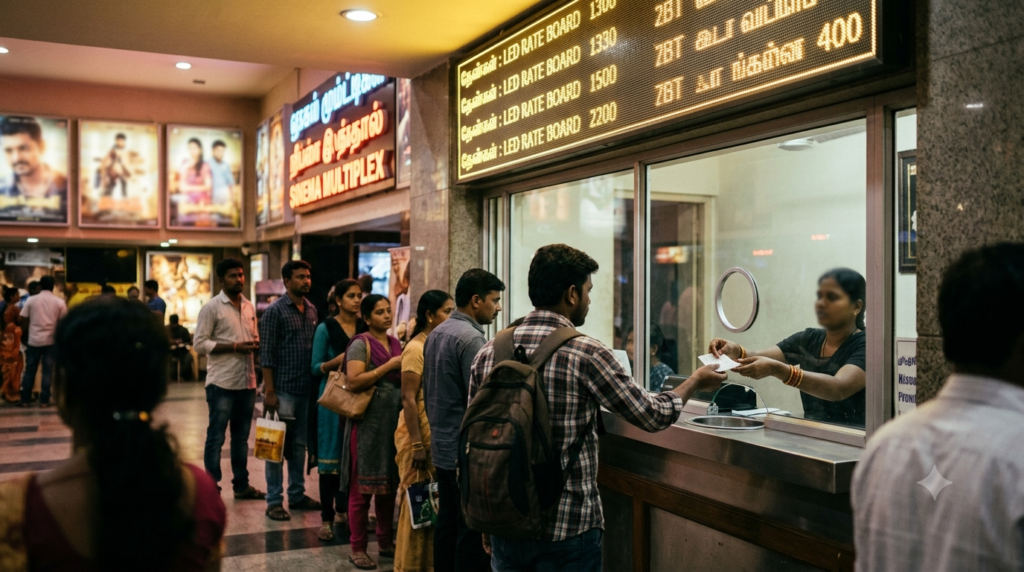
Tollywood Ticket Pricing Reforms: How They Really Hit the Box Office
Tollywood ticket pricing reforms are badly misunderstood. The biggest myth is that Andhra Pradesh and Telangana passed one clean reform in 2025 that lifted ticket caps for good. That never happened.
Instead, both Telugu states still price big-film tickets one movie at a time. They do it through temporary government orders that often reach the High Court within days of release. So to see how the system really shapes the box office, you must follow the actual orders, not the headline.
This guide explains how the pricing system truly works. It shows why the “2025 reform” story is only half true. It also covers what Andhra Pradesh is now planning, which could finally change everything. Every fee, order, and film date below comes from official orders and court reports.
Tollywood Ticket Pricing Reforms: Quick Takeaways
- There is no single permanent 2025 law. Both states approve temporary, film-by-film hikes through separate Government Orders (GOs).
- Telangana’s standard rates are roughly ₹177 for single screens and ₹295 for multiplexes. Hikes sit on top for about 10 days per big film.
- Almost every major hike since late 2024 has faced a court challenge. Judges reversed several of them.
- The December 2024 Pushpa 2 stampede pushed safety, not just price, to the centre of the debate.
- Andhra Pradesh is now drafting a single unified GO to replace the messy per-film system, though it is not law yet.
How Tollywood Ticket Pricing Reforms Actually Work
Here is the part most articles get wrong. Neither state simply “raised the cap” to ₹200 or ₹250 across the board. Instead, a big film’s producers request a temporary hike before release. The government then issues a GO allowing higher rates for a short window, usually the first 10 days.
After that window closes, prices fall back to the normal cap. So the “reform” is really a permission slip, granted release by release. Each hike is a fresh order, so each one can be challenged, delayed, or cancelled on its own. Remember too that GST applies on top of the base rate, so the final amount a viewer pays already includes tax.
This film-by-film model is the core of current Tollywood ticket pricing reforms. It also explains why every big release now comes with its own pricing drama.
A small film gets no such hike. A star vehicle, meanwhile, can charge a premium for a week or two. That gap sits at the heart of every debate below.
The Roots of Tollywood Ticket Pricing Reforms
Andhra Pradesh has long capped cinema ticket rates, alongside Tamil Nadu and Karnataka. The state also holds the highest number of movie screens in India. So any pricing rule there moves real money. In 2022, Telugu films sold about 23.3 crore tickets, the most of any Indian film industry.
For years, the AP government issued a separate order for each big film. It judged those orders partly on the film’s budget. Producers of large, pan-India films argued that fixed caps made costs hard to recover. Audiences, meanwhile, pushed back whenever a hike made a family outing expensive.
Telangana took a slightly looser path, yet it still needs a fresh order for each premium hike. As a result, both states run on the same basic rhythm. A big film arrives, producers request a hike, an order appears, and someone usually objects.
The Real Timeline: Big Releases and Their Price Orders
The clearest way to grasp Tollywood ticket pricing reforms is to trace the actual orders behind recent blockbusters. Notice the correct release years here, because many write-ups get them wrong.
| Film (Release) | State Action | Approved Hike | What Happened Next |
|---|---|---|---|
| Pushpa 2: The Rule (Dec 2024) | AP + Telangana GOs | Premiere up to ₹1,200; regular ₹531 multiplex / ₹354 single (TS) | Telangana HC refused to block it; a fatal stampede followed at the Hyderabad premiere |
| Game Changer (Jan 2025) | Telangana GO | +₹150 multiplex / +₹100 single, plus extra shows | HC intervened; the state withdrew the orders from 16 January |
| They Call Him OG (Sep 2025) | AP + Telangana GOs | TS ₹445 multiplex / ₹277 single; AP benefit shows at ₹1,000 | Telangana HC suspended the hike within days |
| Peddi (Jun 2026) | Telangana GO | +₹125 multiplex / +₹100 single; premiere ₹600 | Cleared, with a 20% welfare-fund clause attached |
Pushpa 2: The Rule released on 5 December 2024, not in 2025. Devara Part 1, another film often mislabelled, actually opened in September 2024. These dates matter, because each pricing order ties to a specific release week.
Game Changer: A Hike That Got Pulled Back
Game Changer, starring Ram Charan, released on 10 January 2025. Telangana first cleared a hike of ₹150 for multiplexes and ₹100 for single screens, plus extra early shows. Then the High Court stepped in.
The state withdrew those orders from 16 January. The film still reportedly took around ₹186 crore worldwide on day one. That number shows how weakly a hike alone predicts a result.
They Call Him OG: The Auction That Went Viral
Pawan Kalyan’s OG arrived in September 2025. Telangana allowed single-screen tickets at ₹277 and multiplex tickets at ₹445 for a 10-day window. Andhra Pradesh, meanwhile, cleared benefit shows near ₹1,000.
One fan even paid ₹1,29,999 for a single benefit-show ticket at a village auction. Soon after, the Telangana High Court suspended the hike, a pattern the trade now knows well.
The Court Factor: Why Hikes Keep Getting Challenged
If one theme defines recent Tollywood ticket pricing reforms, it is litigation. Almost every premium hike since late 2024 has drawn a public-interest petition. Petitioners usually argue that a temporary order unfairly burdens ordinary viewers.
Courts have split on the question. In the Pushpa 2 case, the Telangana High Court refused to interfere. It affirmed that the state may set ticket prices.
Yet for Game Changer and OG, judicial pressure forced hikes to be withdrawn or suspended. Because outcomes vary case by case, producers can never fully bank on a hike surviving the opening week.
The Safety Angle Nobody Priced In
Ticket price is no longer the only issue on the table. On 4 December 2024, a stampede struck the Sandhya Theatre premiere of Pushpa 2 in Hyderabad. It killed a 35-year-old woman and critically injured her young son. The tragedy reshaped the entire conversation.
Since then, courts and the Telangana government have restricted early-morning “benefit” shows. When the state withdrew the Game Changer orders, it also barred future 4 a.m. shows on health and safety grounds. So today, an approved hike arrives bundled with show timings and crowd-control rules.
The Peddi order in June 2026 reflected this shift clearly. Alongside the price hike, the state capped shows at five per day. It also required theatres to route 20% of the extra revenue into a film-workers’ welfare fund.
Andhra Pradesh’s Proposed Tollywood Ticket Pricing Reforms
Here is the genuine reform story, and it is still unfolding. In December 2025, AP Cinematography Minister Kandula Durgesh announced a plan to scrap the film-by-film system entirely. In its place would come a single, comprehensive GO that rationalises prices for all films at once.
A Ticket Price Rationalisation Committee has been consulting on the framework. It includes film-chamber representatives, directors, distributors, and exhibitors.
The proposal also weighs price slabs for low-budget versus high-budget films. It even floats a rule tying local shooting to tourism. As of that announcement, though, the state had not issued any unified order.
So the honest status is simple. The real Tollywood ticket pricing reforms sit in draft form now, not signed in 2025. Anyone planning around them should confirm the current position on the official state portal first.
What Tollywood Ticket Pricing Reforms Mean for Big and Small Films
The impact splits sharply by budget, and that split is the real headline. Big star films can secure a premium hike for their opening window. This lifts per-screen revenue exactly when demand peaks. That flexibility genuinely helps recover the cost of a pan-India release.
Small and mid-budget films rarely win such orders, because states grant hikes for event releases. These films also lose screens fast when a blockbuster runs long. So the system rewards scale while doing little for films that need help most. Our breakdown of big-budget Telugu film profitability is a useful companion read.
Do Tollywood Ticket Pricing Reforms Actually Boost Box Office?
Not on their own. A price hike raises the ceiling on opening-day revenue, yet content still decides whether seats fill.
Game Changer lost its hike mid-run and still posted a huge day-one number. Other premium-priced films faded fast after a loud start. In short, pricing power helps a good film earn more, but it cannot rescue a weak one.
What to Watch Through 2026
Several shifts are worth tracking, though none is certain. Andhra Pradesh may finally issue its unified pricing GO, which would end the per-film scramble. Telangana will likely keep approving case-by-case hikes, often with welfare or safety clauses attached.
Expect the courts to stay involved whenever a hike looks steep. Watch also for tighter crowd-safety rules around premieres, a direct legacy of the 2024 stampede.
Because the whole model still moves, the smartest habit is to check each new order rather than assume last year’s rules apply. For how these revenues get counted, see our guide on how box office collections are tracked in India.
The Bottom Line
The story sold as a tidy 2025 reform is really a running negotiation. It pits producers, governments, courts, and audiences against each other.
Tollywood ticket pricing reforms today mean temporary hikes, frequent legal challenges, and a growing focus on safety. A genuine unified policy still sits on the drawing board in Andhra Pradesh. Big films gain the most, and small films gain the least. Nothing is settled yet.
So treat every quoted rate as current-for-now. Confirm the live figure on official sources before you plan a release or a night out. Streaming shapes this picture too, which our look at theatrical versus OTT release windows unpacks in detail.
Movieshala is an independent film-news and analysis site. We are not a government body and do not issue or approve ticket-pricing orders. For the official position, always refer to the Andhra Pradesh and Telangana government portals.
Frequently Asked Questions
Are Tollywood ticket pricing reforms a permanent 2025 law?
No. Neither state passed a single permanent law raising caps in 2025. Both approve temporary hikes film by film through separate government orders. Andhra Pradesh only announced a plan for a unified order in December 2025.
What are Telangana’s normal cinema ticket prices?
Telangana’s standard rates run around ₹177 for single-screen theatres and ₹295 for multiplexes. Premium hikes for big films sit above these for a limited window, usually the first 10 days. After that, rates return to normal.
Why do Telugu movie ticket hikes keep going to court?
Each hike is a fresh, temporary order, so a petitioner can challenge it through a public-interest plea. They often argue the hike burdens ordinary viewers. Courts have both upheld and reversed such orders since late 2024.
How did the Pushpa 2 stampede affect ticket pricing?
The December 2024 stampede at a Hyderabad premiere added safety to the pricing debate. Courts and the Telangana government began restricting early-morning shows. Approvals now bundle show-timing and crowd-safety conditions with any price hike.
Do higher ticket prices guarantee a bigger box office?
No. A hike raises the revenue ceiling for the opening days, but content and word of mouth still decide occupancy. Some premium-priced films faded quickly. Others succeeded even after a court withdrew the hike mid-run.
Which films benefit most from Tollywood ticket pricing reforms?
Large star-driven and pan-India films benefit most, because states grant hikes for event releases with peak demand. Small and mid-budget films rarely receive such orders. They also lose screens to long blockbuster runs.
Where can I confirm the latest official ticket rates?
Check the Andhra Pradesh and Telangana government portals and reputable news coverage of the specific film’s order. Rates change per release and sometimes shift after a court ruling. So always verify the current figure before relying on it.