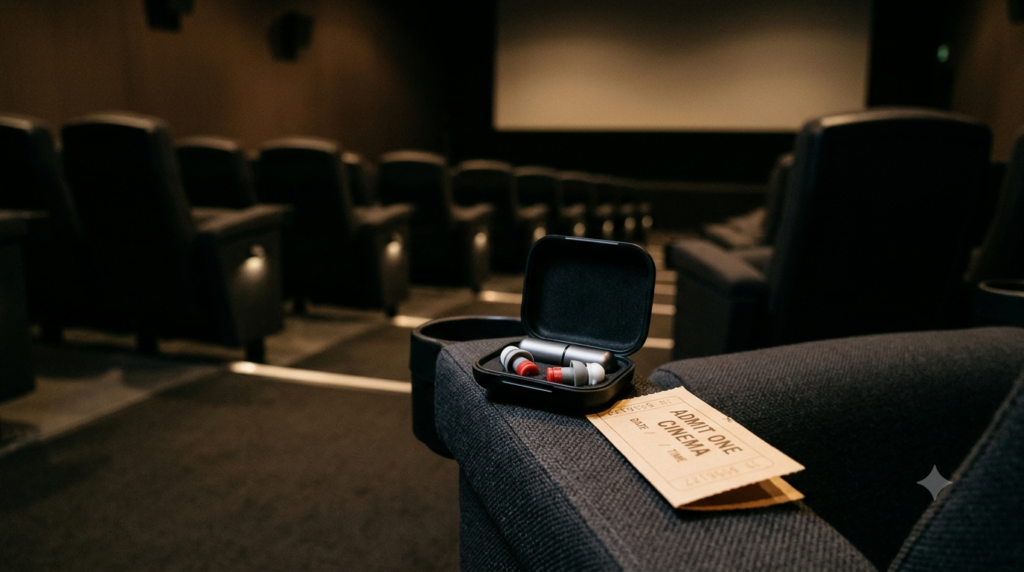
Cinema Hearing Protection: Earplugs and Loud Sound Tips
Cinema hearing protection is worth planning before a film turns uncomfortably loud. A well-fitting pair of earplugs may reduce the sound reaching your ears, while quiet breaks can limit your exposure. Neither step guarantees protection, because the actual sound level, the fit and the time you spend inside all matter.
The aim is not to make every cinema visit silent. It is to give you practical choices if a soundtrack, trailer or action sequence feels too intense. You can also ask a venue what options it offers before buying tickets. Cinema hearing protection starts with a plan you can change if conditions feel wrong.
Cinema hearing protection at a glance
- Bring suitable earplugs: Choose hearing protectors that fit securely and feel comfortable throughout a screening.
- Do not rely on a seat label: A back-row or aisle seat does not carry a verified safe sound level.
- Take quieter breaks: Step into a genuinely quieter space when practical, and check the venue’s re-entry rules.
- Ask before you visit: Enquire about sound concerns, access arrangements and any quieter screenings.
- Notice symptoms: Ringing, pain or muffled hearing deserves attention, even if the film has ended.
Why cinema hearing protection matters when films get loud
Film sound changes from scene to scene. Dialogue may seem gentle, then music or effects rise sharply. A trailer can also feel different from the feature. Your experience may depend on the mix, room acoustics and your sensitivity to sound.
The US National Institute on Deafness and Other Communication Disorders (NIDCD) lists movie theatres among places where loud sound can pose a hearing risk. Its noise-induced hearing loss guide gives an illustrative movie-theatre range of 74–104 dBA. That is not a measurement of your cinema, screening, seat or film.
Sound intensity and exposure time matter together. A brief peak and a long period of raised volume are not the same experience. Nor does a room that feels tolerable at the start necessarily remain comfortable through the credits.
Loudness and personal discomfort are not identical
Some people find certain sounds painful or overwhelming even when others seem comfortable. Meanwhile, an enjoyable soundtrack can still be loud enough to warrant caution. Feeling fine is therefore not proof that your ears received little sound.
Hearing sensitivity, migraine triggers and sensory overload can also change how someone experiences a screening. Earplugs may help with volume, yet they do not address every cause of discomfort. If you have a diagnosed hearing condition, seek guidance tailored to it.
Choosing cinema hearing protection: earplugs and earmuffs
The most useful cinema hearing protection is a device you can fit correctly and wear consistently. Foam earplugs are an accessible starting point. Filtered earplugs may appeal when you want speech and music to sound less altered. Protective earmuffs offer another option, especially for some children.
| Option | Potential advantage | Watch out for |
|---|---|---|
| Soft foam earplugs | Compact and often inexpensive | A poor seal can reduce performance; some dialogue may sound muffled |
| Filtered or flat-attenuation earplugs | May preserve more of the soundtrack’s balance | Fit and actual reduction still vary |
| Properly rated protective earmuffs | Can be simpler to place and remove | Glasses, hair or movement may affect the seal |
| Ordinary wireless earbuds | Familiar shape | Not a substitute for rated hearing protection |
The US National Institute for Occupational Safety and Health (NIOSH) explains these differences in its hearing protector guidance. Its advice on flat-attenuation plugs is useful for film sound, where dialogue and music both matter.
Do not treat a product’s noise reduction rating as the exact amount every wearer receives. That number comes from testing conditions.
In practice, your ear shape, placement and movement change the result. A high printed rating cannot guarantee a safe exposure. For that reason, cinema hearing protection needs more than an attractive product label.
Are music or filtered earplugs better for films?
Filtered earplugs can be a reasonable choice if you dislike the dull sound of ordinary foam. Their design aims for more even reduction across frequencies. However, no filter guarantees clear dialogue or enough protection for every screening. Compare comfort, fit instructions and credible product information before deciding.
If dialogue becomes hard to follow, do not pull a plug halfway out during loud scenes. That creates an unreliable seal. Instead, leave the auditorium for a quieter spot and reassess your options.
How to fit earplugs for cinema hearing protection
Practise at home rather than making the first attempt in a dark room. For roll-down foam plugs, follow the maker’s instructions. The usual method involves clean hands, rolling the plug, gently positioning the ear and holding the foam while it expands. See the NIOSH roll-pull-hold instructions for the precise steps.
- Check the product: Make sure it is an actual hearing protector and suits your ear size.
- Prepare clean hands: Handle reusable plugs as their manufacturer directs. Do not use a dirty or damaged plug.
- Insert gently: Follow the supplied fitting steps. Stop if insertion hurts or causes irritation.
- Check both sides: Look for a comfortable, stable fit instead of assuming both ears are identical.
- Keep the fit: Avoid repeated adjustment during loud sequences unless comfort or safety requires it.
Pre-shaped filtered plugs have different fitting methods, so foam-plug instructions may not apply. For children, use age-appropriate products and follow their safety directions. Do not force an earplug into a small ear canal.
NIOSH notes that individual fit testing gives a better picture of protection than a package rating alone. Home checks cannot prove a particular sound reduction. If you repeatedly struggle to obtain a comfortable seal, ask an audiologist about suitable options.
Cinema hearing protection and seating choices
No row can be described as universally safe. Cinema speakers may sit behind the screen and around the room, while reflected sound changes what reaches a listener. Different auditoriums also use different layouts. A rear seat or an aisle seat therefore cannot promise lower exposure.
Still, an aisle can make a practical difference to your plan. It may help you leave for a quiet break without crossing several people. That is a convenience choice, not an acoustic guarantee. You should also keep exits and accessible routes clear.
If the venue can explain its seating layout, use that information to make an informed choice. Our cinema seat selection guide explains rows, aisles and seat maps. Do not assume premium formats, smaller screens or weekday shows are automatically quieter. Cinema hearing protection works best when seating is only one part of the plan.
Cinema hearing protection: planning quiet breaks
Time away from loud sound reduces time spent in that environment. The World Health Organization (WHO) advises breaks and time in quieter spaces as part of safe listening. A lobby may not always be quiet, especially during busy arrivals or intervals.
Locate the exit before the film begins. If sound feels excessive, leave rather than waiting for the next interval. Check whether the venue permits re-entry, since policies can differ. A break is useful even if it means missing part of the film.
You could also skip an exceptionally loud preview segment or choose a different screening if the venue offers one. These are exposure-reduction options, not proof that the rest of the movie is risk-free. Our cinema interval guide explains why you cannot assume a fixed break.
Cinema hearing protection: what to ask before booking
Contact the cinema through its official website, customer service channel or on-site staff. Explain your concern in plain terms, such as difficulty with sudden loud effects or a need for breaks. Ask what they can confirm about that auditorium and screening.
- Does the venue have a procedure for reporting a soundtrack that feels excessively loud?
- Does it offer any reduced-volume or sensory-friendly sessions for this film?
- Can staff explain the re-entry rules if you leave for a quiet break?
- Are there access arrangements for a visitor who needs to step out quickly?
- Can staff discuss a seating request without claiming a particular seat is safe?
If you need captions to follow dialogue, our subtitles and audio description guide explains the different features. Ask the cinema which options apply to your exact showing.
Staff may not have a verified decibel record for your exact showing. That does not mean they are hiding one. Sound levels can vary across scenes, so a single number would not describe the whole film anyway.
Some cinemas may offer quieter or sensory-friendly sessions, but availability and conditions are venue-specific. Confirm them directly before travel. If staff cannot provide the information you need, choose a different screening or viewing option rather than relying on an unsupported assurance.
Cinema hearing protection for children and sound-sensitive visitors
Children may struggle to describe sound discomfort before they become upset. A parent or carer can bring properly sized protective earmuffs, discuss the screening with the venue and plan a quick exit. The child still needs to tolerate the device comfortably.
Do not assume child-sized earmuffs block a guaranteed amount of sound. The seal matters, and movement can disrupt it. Very young children may also dislike long films or sudden effects regardless of the volume.
For someone who experiences sensory overload, the full visit matters. Queues, crowded foyers, bright trailers and unexpected effects may add to the strain. A quieter session or a home viewing option might be more suitable, depending on the person.
When a child has a hearing condition, ear pain or unusual sensitivity, ask a qualified clinician for individual advice. Generic cinema hearing protection tips cannot replace that assessment. For families, cinema hearing protection also means planning an easy exit.
Can a phone app tell you if the screening is safe?
A sound-level app can help you notice possible loudness, but one phone reading cannot certify a screening as safe. Microphones, calibration and app quality affect results. A brief measurement also misses changing peaks and your total exposure.
NIOSH offers an iOS Sound Level Meter app and describes its validation conditions. It does not certify every phone app or every informal reading. Check the device and software limitations before using an app to make a decision.
There is another practical issue: bright screens can disturb nearby viewers. If you need to check a reading, ask staff what is appropriate. You can also report your concern without presenting a number that you cannot verify.
Common mistakes that undermine cinema hearing protection
The first mistake is waiting until a loud scene starts to search for earplugs. A sudden effect may arrive before you can respond. Having protection ready avoids a scramble in the dark, although it cannot eliminate all risk.
Another mistake is choosing plugs solely by the largest number on the packet. The fit you achieve matters greatly. An uncomfortable device may get removed halfway through the film, which defeats the purpose of bringing it.
Ordinary active noise-cancelling earbuds also cause confusion. NIOSH says noise cancellation alone should not count as hearing protection unless the device carries an appropriate noise reduction rating. Do not mistake a consumer listening feature for a tested protector.
Finally, avoid treating an interval as a reset button. Your exposure from earlier scenes still happened. Breaks reduce additional exposure, but they cannot undo what your ears have already experienced.
Cinema hearing protection checklist for your visit
- Before choosing the film: Consider the length, possible intense sound effects and your own sensitivity. Ask the cinema about available screening options.
- Before leaving home: Pack well-fitting earplugs or earmuffs and any suitable carry case. Try the fit while the room is quiet.
- At the venue: Find the exits, ask about re-entry and note whether a genuinely quieter space is available.
- Before the film starts: Put protection in place if you expect loud sound. Do not wait for discomfort to begin.
- During the screening: Leave if sound causes pain, distress or other worrying symptoms. Do not stay just to finish the film.
- After the screening: Notice any ringing, muffled sound or unusual difficulty hearing. Seek medical advice when symptoms occur.
These steps form a practical plan, not a guarantee. The safest choice may be to skip a screening if you cannot manage its sound comfortably. No ticket purchase obliges you to remain in the auditorium.
When the plan fails: practical alternatives
Your plugs might hurt, the available seat might be awkward, or the show might feel much louder than expected. In that situation, do not force a poor fit or stay through pain. Leave the sound environment and tell staff about the problem.
If the cinema permits a quieter screening, you can enquire about switching through its official channel. Do not assume a switch or refund will be available. If there is no suitable option, consider watching the film later at home where you control the volume.
Persistent ringing, muffled hearing, pain or new hearing difficulty after a show warrants medical advice. The US Centers for Disease Control and Prevention (CDC) advises hearing checks for people with warning signs. Its symptom guide explains what to watch for. If you suddenly lose hearing, seek urgent medical care; NIDCD treats sudden deafness as a medical emergency.
Before the credits roll
Cinema hearing protection is a combination of fit, exposure time and sensible choices during the visit. Earplugs may help, but they do not make an unknown soundtrack harmless. Seats, apps and venue assurances also have limits.
Plan an exit route and ask questions before buying tickets. If the volume becomes painful, the better decision is to step away. The film can wait; your hearing deserves attention. Effective cinema hearing protection includes knowing when to leave.
Frequently asked questions
Should I wear earplugs at the cinema?
Earplugs are reasonable to consider when you expect a loud screening. NIDCD specifically includes movie theatres among places where earplugs can help reduce sound exposure. Choose actual hearing protectors, fit them properly and take breaks when needed. No earplug guarantees complete protection.
Will earplugs ruin movie dialogue?
They can change how dialogue sounds, particularly if they reduce some frequencies more than others. Filtered plugs may preserve the balance better for some listeners, although results vary. Test comfort and clarity beforehand where possible. Never break the seal to improve speech during a loud scene.
Are back-row seats safer for hearing?
There is no reliable blanket rule that a back-row seat is safe. Speaker position, acoustics and soundtrack levels vary between cinemas. An aisle seat might help you leave more easily, but that is not a sound-level promise. Ask staff about the auditorium without expecting a guaranteed safe row.
Can cinema speakers cause tinnitus?
Exposure to sufficiently loud sound can contribute to ringing in the ears, called tinnitus. The risk depends on loudness, duration and other factors, so one screening does not produce a predictable result. If ringing persists or your hearing changes, seek medical assessment rather than waiting for another movie.
Are noise-cancelling earbuds enough?
Ordinary active noise-cancelling earbuds should not automatically replace hearing protectors. NIOSH cautions that noise cancellation is not hearing protection unless the device has an appropriate noise reduction rating. Look for credible protective specifications and a proper fit. Avoid turning on extra audio to mask the film.
Can I ask a cinema to lower the volume?
Yes, you can report discomfort and ask staff whether the sound can be reviewed. The cinema may have technical or operational limits, so a change is not guaranteed. You can also enquire about reduced-volume sessions, if offered. Leave if the sound remains painful.
Do children need different hearing protection?
Children need protection that fits their size and stays comfortable. Suitable protective earmuffs may be easier for some families than earplugs. Follow the product guidance and supervise their use. For children with hearing issues or pain, seek advice from a qualified healthcare professional.
How often should I take a break during a loud film?
There is no fixed break schedule that guarantees safety for every screening. The WHO advises quieter breaks during loud recreational activities because they reduce time exposed to noise. Leave sooner if the soundtrack causes discomfort. Check re-entry rules so you can plan without pressure.