OTT vs Theatrical Strategy for Telugu Films in 2026: A Complete Guide
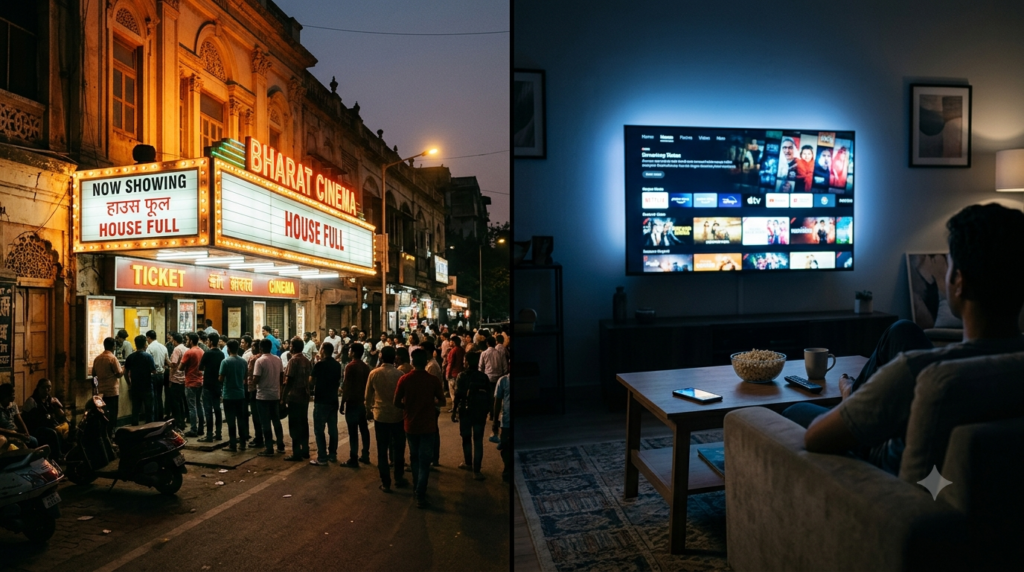
The OTT vs theatrical strategy behind Telugu films has shifted faster in the last two years than in the whole decade before it. Big releases no longer chase box-office numbers alone. Streaming views, dubbed reach across India, and the gap between a cinema run and a digital drop now shape how every Tollywood film is planned.
This guide breaks down how that OTT vs theatrical strategy actually works in 2026, using real releases like Mirai and Kishkindhapuri. It uses the correct dates, platforms, and box-office numbers that many other pages still get wrong.

A quick note before you plan a watch: release dates and streaming deals change often. Always confirm the current window on the platform’s own announcement or the film’s official handles.
OTT vs Theatrical Strategy at a Glance
- Theatres open the big films first. Star-driven Telugu movies still run three to six weeks in cinemas before any digital release.
- The OTT window has shrunk. Many films now reach streaming within four to eight weeks, not the old three to four months.
- Hybrid is the default. A theatrical run for revenue, then an OTT premiere for reach, is how most films are now planned.
- Platform fit drives the choice. Mirai went to JioHotstar, while Kishkindhapuri went to ZEE5 — the pick follows audience and deal value, not habit.
How the OTT vs Theatrical Strategy Shifted in 2026
Streaming platforms like Netflix, Amazon Prime Video, ZEE5 and JioHotstar have changed the maths of a Telugu release. A film’s success once rested only on its first-week collections. Now producers weigh cinema revenue against streaming value, dubbed reach, and the risk of piracy if the digital drop comes too late. For a fuller picture of how the business works, see our breakdown of the Telugu film industry.
Because a strong theatrical run still sets the price of a streaming deal, most studios protect the cinema window first. After that, they move fast to OTT so the buzz does not fade. This two-step rhythm is the core of every modern OTT vs theatrical strategy in Tollywood.
Digital reach also travels further than a cinema print. Subtitles and dubbing let one film play to Tamil, Kannada, Malayalam and Hindi audiences at once, so a mid-budget Telugu title can find viewers it would never reach in theatres alone.
Why Theatres Still Lead in the OTT vs Theatrical Strategy
Despite the streaming boom, theatrical releases remain the backbone of Tollywood economics. Ticket sales bring direct, front-loaded revenue that a film needs to recover its budget quickly. For star-driven or high-budget projects, the opening weekend is still the single biggest number in the film’s life.
The cinema experience also sells something OTT cannot copy. Large-format screens, Dolby Atmos sound and a full-house reaction give tentpole films their word-of-mouth. Because of that, big releases guard an exclusive theatrical run before any digital move.
Festival timing sharpens this further. A Sankranti or summer slot can lift a big film’s opening by a wide margin. So studios hold spectacle titles for those windows rather than rushing them online. The theatrical date, in other words, is chosen as carefully as the streaming one.
The shrinking theatrical window
The exclusive cinema stretch is getting shorter, though. Where films once held theatres for eight to twelve weeks, many now move to streaming within a month or two. So the debate is no longer theatre or OTT — it is how soon the digital release should follow.
Mirai: A Case Study in OTT vs Theatrical Strategy
Mirai shows the modern OTT vs theatrical strategy in one clean timeline. The fantasy-action film released in cinemas worldwide on 12 September 2025. Teja Sajja played the lead, while Manchu Manoj appeared as the antagonist, under director Karthik Gattamneni for People Media Factory.
The film earned its money on the big screen first. It grossed around ₹92 crore in India and about ₹141 crore worldwide, finishing among the top-grossing Telugu films of 2025.
Then came the digital move. Mirai began streaming on JioHotstar on 10 October 2025, under a month after its theatrical release. It arrived in Telugu, Tamil, Kannada and Malayalam, with the Hindi version following a little later.
One correction matters here, because several pages still repeat it wrong. Mirai streamed on JioHotstar, not ZEE5, and its window was roughly four weeks, not ten days. Getting the platform and window right is the whole point of studying a real OTT vs theatrical strategy.
The September 2025 Clash: Mirai vs Kishkindhapuri
The same date offered a natural experiment. Kishkindhapuri, a horror thriller starring Bellamkonda Sai Sreenivas and Anupama Parameswaran, also opened on 12 September 2025 and went head to head with Mirai. Directed by Koushik Pegallapati, it grossed about ₹24.10 crore across its run — a strong result for a mid-budget scare film.
Their digital paths then split. Kishkindhapuri reached ZEE5 on 17 October 2025, with a Zee Telugu television premiere two days later. So two films that clashed in cinemas ended up on different platforms, each matched to the deal and audience that suited it best.
The Hybrid Model Behind Today’s OTT vs Theatrical Strategy
Most Telugu producers now plan a hybrid release from day one. The film opens wide in theatres to capture ticket revenue and reviews. After the cinema run cools, it premieres on a streaming service for the audience that prefers to watch from home.
This model gives viewers a choice and gives studios two income streams. Star power drives the box office, while streaming keeps the film alive for months after its theatrical exit. Because both windows feed each other, the hybrid route now defines the standard OTT vs theatrical strategy across Tollywood.
What Decides a Film’s OTT vs Theatrical Strategy
Not every film follows the same plan. Several factors decide whether a title gets a long cinema run, a quick digital drop, or a straight-to-OTT release. Knowing these helps you predict where a film will land.
- Budget and star power. High-budget, star-led films protect a long theatrical window because ticket sales matter most.
- Genre. Spectacle films reward the big screen, while dramas and thrillers often travel better on OTT.
- Box-office result. A hit can hold theatres longer, while an underperformer moves to streaming sooner to recover costs.
- Deal value. A rich streaming offer can pull the digital date forward, since guaranteed money lowers risk.
- Piracy pressure. A faster, legal OTT release reduces the incentive for illegal copies during the gap.
How OTT Deals Are Valued in Tollywood
The size of a streaming cheque is not random. It follows a film’s theatrical result, its star value, and the languages it can travel in. A film that opens strong in cinemas can command a far richer OTT deal than one that fades in its first week.
Dubbing rights add real weight too. A Telugu film that streams in Tamil, Kannada, Malayalam and Hindi reaches four extra markets. So platforms pay more for titles with wide dubbing potential. Satellite television rights are often bundled in, so a single deal can cover both the digital premiere and a later TV run.
This is why the OTT vs theatrical strategy starts long before release. Producers plan the cinema window, the streaming partner, and the dubbing slate together, since each choice changes what the others are worth. When a deal is signed early, the digital date can even be set before the film reaches theatres.
The platforms driving Telugu streaming
A handful of services now anchor Telugu digital releases. JioHotstar, ZEE5, Netflix and Amazon Prime Video compete hard for the biggest titles, while regional and satellite deals fill the gaps. Because each platform chases a slightly different audience, the choice of partner has become a core part of any release plan. Mirai on JioHotstar and Kishkindhapuri on ZEE5 both showed that in 2025.
G2, Jai Hanuman and the OTT vs Theatrical Strategy Ahead
Two of the most-tracked upcoming titles show how fluid these plans are. Both are confirmed projects, yet their dates have already moved — a reminder that a release calendar is a plan, not a promise.
| Film | Theatrical status | OTT status |
|---|---|---|
| G2 (Goodachari 2) | Set for 1 May 2026, then postponed to late 2026 after a shoot injury to Adivi Sesh | Not yet announced |
| Jai Hanuman | Expected in 2026; exact date not officially locked | Not yet announced |
G2, the spy sequel with Adivi Sesh, Emraan Hashmi and Wamiqa Gabbi, was locked for 1 May 2026. It then slipped to later in the year, so treat any streaming date as speculation until the makers confirm it.
Jai Hanuman, Prasanth Varma’s follow-up to HanuMan, features Rishab Shetty and Teja Sajja. Because it is a large mythological tentpole, expect a full theatrical run before any OTT talk begins. Both films sit at the centre of Tollywood’s growing sequels and shared universes. You can track the wider slate in our guide to the most anticipated Telugu films of 2026.
Future Trends Shaping OTT vs Theatrical Strategy
Several shifts are likely to define the next phase. Simultaneous theatre-and-OTT releases are becoming more common for small and mid-budget films. A limited cinema run plus wide streaming can beat a thin standalone release. Meanwhile, big films keep their exclusive theatrical window intact.
Platforms are also chasing pre-theatrical deals, locking digital rights before a film even opens. As international interest in pan-India cinema grows, dubbed and subtitled versions will drive more of the streaming value. Each of these trends nudges the OTT vs theatrical strategy toward faster, wider, and more flexible releases.
What fans often get wrong about OTT windows
Two myths keep spreading. First, that OTT has killed theatres — it has not; big films still earn most of their money in cinemas. Second, that every film hits streaming within days — most still hold an exclusive theatrical run of several weeks. When in doubt, wait for the platform’s own announcement rather than a rumour.
Before You Stream: The Bottom Line
The Telugu industry has settled into a practical rhythm. Theatres lead for revenue and spectacle, OTT follows for reach and longevity, and the two now work as one plan rather than rivals.
For viewers, that means big films are still worth the cinema trip. Patient fans can catch almost anything legally online within a month or two. Always watch through official platforms, both to see the film as intended and to keep supporting the people who made it.
Frequently Asked Questions
Which is better for a Telugu film, an OTT or a theatrical release?
Neither wins outright; the best OTT vs theatrical strategy uses both. Big, star-driven films earn most of their money in theatres, then use OTT to extend reach. Smaller films often benefit from a quicker or wider streaming release.
When did Mirai release on OTT and on which platform?
Mirai began streaming on JioHotstar on 10 October 2025, under a month after its 12 September 2025 theatrical release. It launched in Telugu, Tamil, Kannada and Malayalam, with the Hindi version arriving later.
How long do Telugu films stay in theatres before OTT now?
Most big films hold an exclusive cinema run of three to six weeks before moving to streaming. Smaller films can reach OTT even faster, sometimes within a month of release.
Where can I watch Kishkindhapuri online?
Kishkindhapuri streams on ZEE5, where it premiered on 17 October 2025 after its September theatrical run. It also aired on Zee Telugu television shortly after the digital launch.
Is G2 (Goodachari 2) releasing in 2026?
G2 was locked for 1 May 2026 but was postponed to later in 2026 after a shoot injury to Adivi Sesh. Check the makers’ official announcements for the confirmed date before planning a watch.
What is a hybrid release in Telugu cinema?
A hybrid release combines a theatrical run with an OTT premiere that follows soon after. Theatres capture ticket revenue and buzz, while streaming adds reach and a longer shelf life.
Do big Telugu films still release in theatres first?
Yes. Star-driven and high-budget films almost always open in cinemas first. The opening weekend remains the largest single revenue source, and it sets the value of the later streaming deal.