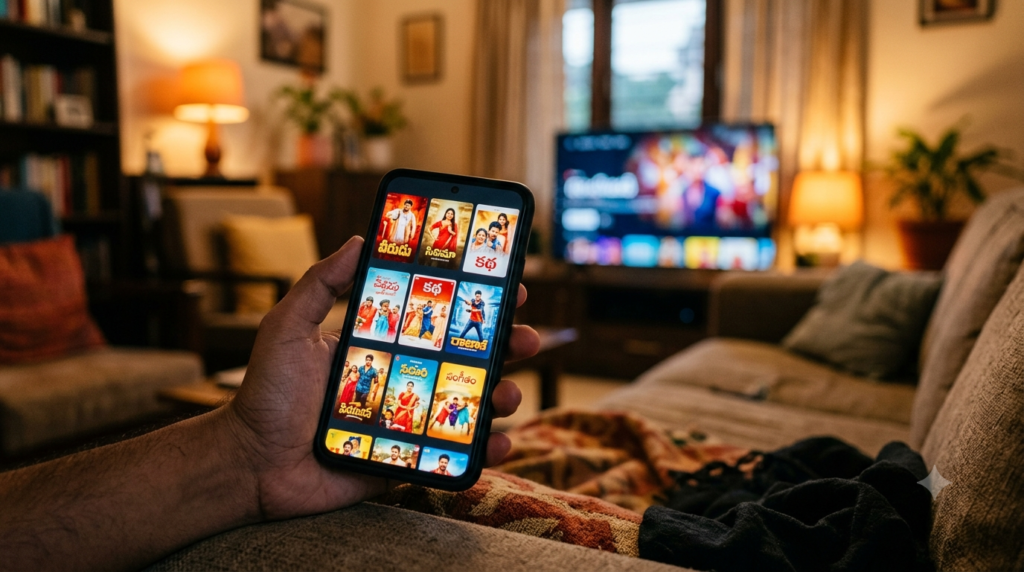
Amazon Prime Regional Cinema: How It Empowers South India
Amazon Prime regional cinema has quietly become one of the biggest forces reshaping how South India watches movies. A decade after Prime Video launched here, Telugu, Tamil, Kannada and Malayalam films no longer stay locked inside their home states. Instead, they travel across India and often across the world.
This guide breaks down how the platform empowers South Indian viewers and creators. It also covers what a subscription now costs, and where the strategy still falls short.

Movieshala is an independent entertainment blog. We are not affiliated with Amazon or Prime Video, and we take no bookings or payments. Streaming prices and titles change often, so confirm the latest details on the official Prime Video India page linked below before you subscribe.
Amazon Prime regional cinema at a glance
- Prime Video completed 10 years in India in 2026. It now programmes in 10 languages, including Telugu, Tamil, Kannada and Malayalam.
- Over 60% of the platform’s Indian customers stream in four or more languages. Multilingual content is now the core of its strategy.
- Roughly a quarter of viewing for Indian titles comes from outside India, which shows how far a regional film can travel.
- Prime Video India revealed close to 55 titles for 2026, with Telugu and Tamil originals sitting alongside Hindi shows.
- Since June 2025, most Prime members see limited ads on Prime Video unless they buy an ad-free add-on.
How Amazon Prime regional cinema empowers South India viewers
Amazon Prime regional cinema works because the platform treats South Indian languages as equal partners. Executives have said the service set out to entertain all of India, not one segment. That thinking shapes everything below, from the interface language to the release strategy.
1. Local first, with global reach
Prime Video launched Telugu and Tamil content early in its India journey. So regional films were never treated as a side project. Because streaming removes geographic limits, a Telugu or Tamil title can reach viewers who would never have found it in a theatre.
The Tamil film “Jai Bhim” became a pan-India talking point on the platform. It proved that a strong regional story can cross every language line.
The numbers back this up. Over half of the most-watched non-English titles on the service in 2025 came from Prime Video India. So a Telugu or Tamil hit is no longer a local event. It is often a national one, and sometimes a global one.
2. A region-wise strategy, not a Hindi-only slate
The platform offers user interfaces and content in Hindi, Telugu and Tamil. Alongside that, it subtitles and dubs across nine languages. As a result, a viewer in Vijayawada or Coimbatore gets an app that speaks their language.
It is simply not a Mumbai-first experience. This region-wise approach is a big reason South Indian subscribers stay loyal.
3. Winning Tier-2 and Tier-3 India
Internet access keeps spreading into smaller towns. So Prime Video leans hard on regional-language titles to grow there. These viewers want stories rooted in their own culture, and native-language films deliver exactly that. Consequently, regional content has become the backbone of the platform’s growth across the South.
4. Real partnerships with South Indian filmmakers
Rather than importing only Hindi shows, Prime Video builds direct relationships with Telugu, Tamil, Kannada and Malayalam creators. Because these partnerships respect local storytelling, the originals feel authentic instead of borrowed.
This matters for creators too. A streaming deal now offers national exposure that a regional theatrical run rarely could. You can see the same pattern in how regional dubbing has lifted Telugu shows on the platform.
5. Backing theatres, then streaming
Prime Video has not abandoned cinemas, and it still values a theatrical window for big films. Many titles now open in theatres first and then premiere on the service weeks later. This hybrid model respects the theatre business while it still serves streaming subscribers. If you want the full picture, our guide to the theatrical vs OTT release window explains how the timing works.
What Amazon Prime regional cinema access costs in India
To watch Amazon Prime regional cinema, you need a Prime membership or a Prime Video plan. The old version of this article listed no pricing at all. So here is the current structure. Prime membership bundles Prime Video with shopping delivery, music and more, while lighter plans focus on streaming alone.
| Plan | Price (India) | Best for |
|---|---|---|
| Monthly | ₹299 | Short-term or trial viewers |
| Quarterly | ₹599 | Occasional bingers |
| Annual (Prime) | ₹1,499 | Full Prime benefits and best value |
| Prime Lite / Annual Lite | ₹799 / year | Budget mobile and HD viewing |
The Monthly plan costs ₹299 and the Annual Prime plan costs ₹1,499. So a yearly commitment saves the most. The Prime Lite plan at ₹799 a year is the cheapest full-year route, though it caps quality and carries ads.
Since June 2025, limited ads appear for most members. An ad-free add-on then costs about ₹699 per year on top of your plan. You can see the full plan details on the official Prime Video India page. Prices change, so always check before you pay.
How to start streaming South Indian films on Prime Video
Getting started is simple, even if you are new to the service. Follow these steps to reach the regional library quickly.
- Sign in on the Prime Video app or website with your Amazon account.
- Set your preferred language in the profile menu, so the app surfaces Telugu, Tamil, Kannada or Malayalam titles first.
- Use the language filter under Movies or Shows to browse only regional content.
- Turn on subtitles from the playback screen if you watch across languages.
- Save titles to your Watchlist, since new regional releases arrive most weeks.
How Amazon Prime regional cinema compares to rivals
Prime Video is not the only home for South Indian films, so it helps to weigh the options. A regional-first service such as aha focuses purely on Telugu and Tamil, and it often prices lower. Netflix and JioHotstar also chase South titles, yet their libraries lean more towards Hindi and global content.
What sets Amazon Prime regional cinema apart is scale plus bundling. You get regional films, global titles and shopping perks in one plan. For a viewer who wants breadth, that mix is hard to beat.
What Amazon Prime regional cinema means for viewers
For viewers, the shift means more culturally rooted content in their own language. It also means easier access to regional films and series. A movie that once played only in one state can now sit in a national library, ready to stream on demand. For creators, the platform turns a regional release into a national and even global launch pad.
For the wider industry, South Indian cinema has gained real weight in the national streaming ecosystem. It is no longer a niche add-on but a genuine growth driver.
Because Indian titles now perform abroad, filmmakers here have a bigger market than before. They also hold a stronger negotiating hand. This broader change is something we track in our look at the OTT impact on Indian cinema.
The challenges: ads, pricing and competition
The picture is not flawless, and a few real problems deserve honest mention. First, the move to ads has annoyed some long-time subscribers who paid to avoid them. Although the ad-free add-on exists, it raises the effective cost of a plan.
Second, competition in the South is fierce. Regional-first services such as aha and other local players fight hard on price, and they also chase Telugu and Tamil exclusives. Third, a big budget never guarantees acceptance, because South Indian audiences reward cultural authenticity over spectacle. If a title misreads local taste, no amount of marketing saves it.
There is also a structural shift worth watching. Prime Video India has folded in Amazon MX Player, so it now offers free ad-supported content next to its paid library. This widens reach, yet it also blurs the line between free and premium tiers. For viewers, that means more choice, but also more plans to compare before paying.
The 2026 South Indian slate
At its “Prime Video Presents 2026” event in Mumbai in March 2026, the service unveiled close to 55 new titles across Hindi, Tamil and Telugu. Several lean directly into South Indian storytelling, which shows the regional push is accelerating rather than slowing. You can read the full lineup on the official 2026 slate announcement.
- A Telugu adaptation of the reality format “The Traitors”, hosted by Teja Sajja.
- “Guvvala Cheruvu Ghat”, a Telugu drama starring Kiran Abbavaram and Thiruveer.
- “Exam”, a Tamil drama, plus a second season of the Tamil thriller “Vadhandhi”.
- “Inspector Rishi” Season 2 and the drama “Isakapatnam” for South audiences.
Shilangi Mukherji, who heads the SVOD business for Prime Video India, called the slate a new era of content diversity. Note one correction here.
An earlier version of this article claimed Amazon launched a dedicated “South Indian content hub” and interactive dialect subtitles in April 2026. We could not verify those claims on any official source, so we have removed them. When something is unconfirmed, we say so rather than repeat it.
The bottom line
Amazon Prime regional cinema has moved South Indian films from local screens to a national and global stage, and that shift is real, not marketing spin. The platform backs Telugu, Tamil, Kannada and Malayalam stories with money, interface support and a steady slate.
If you want the widest regional library with global titles alongside, an annual plan gives the best value. Prime Lite suits budget viewers who can accept ads. Just confirm the current price on the official site before you subscribe, and weigh the ad situation against your viewing habits.
FAQs
What does Amazon Prime regional cinema actually include?
It covers Telugu, Tamil, Kannada and Malayalam films and series. That includes originals made for the platform and licensed titles that arrive after a theatrical run. Prime Video programmes in 10 languages and invests most heavily in Hindi, Tamil and Telugu. So South Indian viewers get a large, growing library in their own languages.
How much does Amazon Prime cost in India in 2026?
The Monthly plan is ₹299, Quarterly is ₹599, and the Annual Prime plan is ₹1,499. A cheaper Prime Lite plan costs ₹799 a year with HD quality and ads. These figures can change, so check the official Prime Video India page before subscribing.
Does Prime Video show ads now?
Yes. Since June 2025, most Prime members see limited ads during movies and shows. You can remove them by buying an ad-free add-on. It costs roughly ₹699 per year on top of your existing plan.
Are South Indian films watched outside their home states?
Very much so. The platform reports that a large share of viewing for regional titles comes from outside the home state. About a quarter of Indian-title viewing comes from outside India altogether. Streaming and subtitles have removed the old geographic walls.
Does Prime Video release South Indian films only after theatres?
Not always. Many big films open in cinemas first and then stream weeks later, while some titles premiere directly on the platform. The approach is a hybrid that respects both theatres and streaming subscribers.
Which South Indian titles are coming to Prime Video in 2026?
Announced titles include a Telugu version of “The Traitors” with Teja Sajja and the Telugu drama “Guvvala Cheruvu Ghat”. The Tamil drama “Exam” is also on the slate, along with second seasons of “Vadhandhi” and “Inspector Rishi”. The full 2026 lineup runs to close to 55 titles across languages.
Is Amazon Prime regional cinema worth it for fans?
For most regional film lovers, yes, because the library is deep and the annual plan is affordable. If you mainly watch on a phone and do not mind ads, Prime Lite trims the cost further. Weigh the ad-free add-on only if ads genuinely bother you. Remember that a full Prime plan also bundles shopping delivery, music and gaming perks, so the true value depends on how much of that wider ecosystem you actually use.