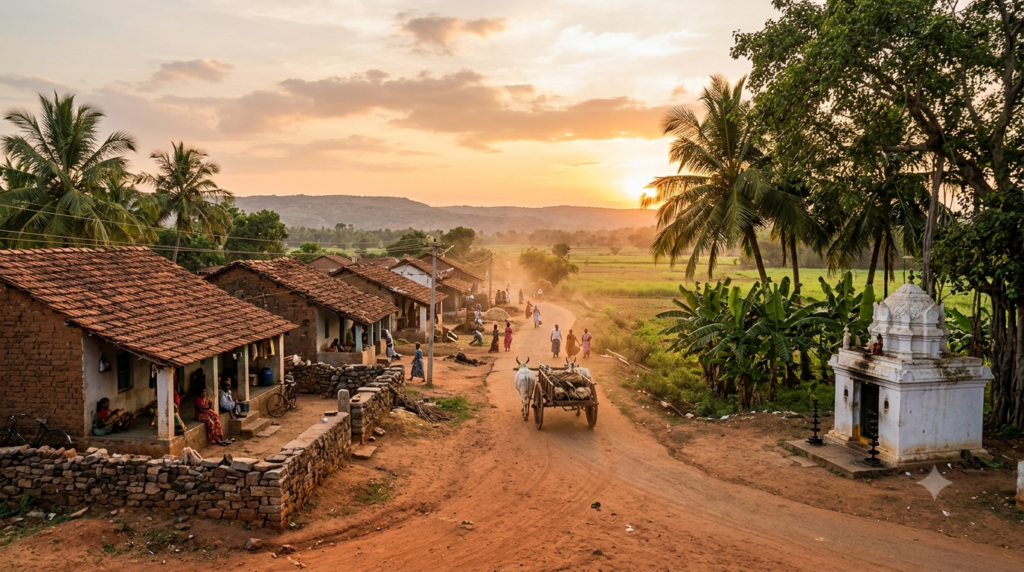
Telugu Films & Regional Identity: How Culture Shapes Cinema
The power of Telugu films regional identity lies in one paradox. The more local a story sounds, the further it travels. A funeral in a Telangana village, a smuggler’s Chittoor slang, a caste feud in a Srikakulam town — these hyper-specific worlds have become Tollywood’s biggest emotional exports.
This guide shows how dialect, folklore, and rooted settings turned “regional” into a real advantage rather than a limitation. Every film and fact here is verified against reliable sources, so you can trust the list and rewatch each title tonight.
What Shapes Telugu Films Regional Identity
Telugu films regional identity is built from a few concrete tools. It is not vague talk of “culture.” Here is the short version before we dig in.
- Dialect: Telangana, Rayalaseema, and Uttarandhra speech instantly signal place and class.
- Folklore and ritual: funeral customs, village jataras, and reincarnation myths act as story engines.
- Setting: coal belts, coastal towns, and Godavari villages replace generic city backdrops.
- Directors: a new wave treats authenticity as emotional currency, so place becomes the plot.
- Payoff: because dubbing and streaming carry rooted films nationwide, local detail now scales up.
Roots of Regional Identity in Telugu Storytelling
Telugu films have long mirrored the social fabric of Andhra Pradesh and Telangana. From village feuds to city dreams, the best of them carry the rhythm of Telugu life. Its language, its faith, and its festivals all show up on screen.
Early masters set this template. Directors like Bapu, K. Viswanath, and Jandhyala folded regional dance, music, and costume into their frames. As a result, their cinema felt like an extension of everyday life rather than a painted backdrop.
That legacy runs straight into today’s filmmakers. Sukumar, Venu Yeldandi, and Srikanth Odela all use place and dialect as the emotional core. A story that knows exactly where it stands simply hits harder.
The shift also has a political root. After Telangana became a separate state in 2014, its dialect and rural life gained fresh confidence on screen. Films such as Mallesham and Pelli Choopulu quietly proved that this soil held strong stories, so the later hits did not arrive from nowhere. For the wider picture, our history of Telugu cinema traces this arc from the earliest talkies.
How Dialects Define Telugu Films Regional Identity
Dialect is the fastest way a film declares where it belongs. Telugu is not one flat language. Telangana, Rayalaseema, and Uttarandhra speech each carry their own tone and vocabulary, so a single line of dialogue can place a character on the map.
Take Balagam (2023). Venu Yeldandi’s debut feature is soaked in the Telangana dialect. Because it grounds every rite and joke in local speech, the village feels real.
Dasara (2023) then uses raw Telangana slang from the Singareni coal belt, kept deliberately rough. Meanwhile Pushpa: The Rise (2021) turned Chittoor slang into a mass phenomenon. That forest-country speech made Allu Arjun’s laborer feel rooted rather than styled.
This linguistic precision does double duty. Locals recognise themselves on screen, while outsiders get a genuine taste of a new region. Because Telugu films regional identity starts with how people actually speak, dialect stays its clearest marker.
| Region | Dialect flavour | Signature film |
|---|---|---|
| Telangana | Earthy, rural, rhythmic | Balagam (2023) |
| Coal belt (Godavarikhani) | Raw, working-class | Dasara (2023) |
| Rayalaseema / Chittoor | Sharp, slang-heavy | Pushpa: The Rise (2021) |
| Uttarandhra / Srikakulam | Lyrical, distinct vocabulary | Palasa 1978 (2020) |
Folklore, Customs and Symbolism On Screen
Telugu filmmakers rarely use tradition as mere decoration. More often, folklore becomes the actual engine of the plot, so custom and conflict move together.
Eega (2012), directed by Rajamouli, borrowed reincarnation folklore and rebuilt it as a modern revenge fantasy. Rangasthalam (2018) recreated a rural Godavari world down to its festivals, songs, and costumes. Balagam leaned on funeral rituals to show how grief both binds and fractures a family.
The detail can be startlingly precise. In Balagam, the family waits for a crow to accept the funeral offering, since local belief treats that moment as the soul’s release. That single ritual carries the film’s whole theme of forgiveness.
Music works the same way. The songs in Rangasthalam and Balagam use folk tunes and local instruments, not generic film pop. So the soundtrack itself becomes a marker of region, and the whole package feels harder to copy.
Rural vs Urban: Two Worlds in Telugu Cinema
Telugu cinema keeps returning to a tension between rural roots and urban ambition. The village stands for memory, moral codes, and belonging, while the city stands for aspiration, conflict, and reinvention.
Films like Rangasthalam and Balagam thrive on rural texture, because slow rhythms and thick dialect give them weight. City dramas such as Brochevarevarura or Middle Class Melodies mix urban wit with small-town honesty. This range lets one industry court the mass crowd and the multiplex viewer at once.
| Element | Rural films | Urban films |
|---|---|---|
| Emotional core | Roots, tradition, family | Ambition, change, identity |
| Language | Thick regional dialect | Mixed city Telugu, English |
| Typical example | Balagam, Rangasthalam | Middle Class Melodies |
Films That Built Telugu Films Regional Identity
A handful of films show why cultural specificity now works as a strength. Each one turned a narrow world into a wide hit.
- Balagam (2023): a small rural drama with no big stars. It became a hit on cultural truth alone, and later won the Filmfare Award for Best Film (Telugu).
- Dasara (2023): Srikanth Odela’s coal-belt story grossed over ₹121 crore worldwide, because its Telangana setting felt lived-in.
- Pushpa: The Rise (2021): Allu Arjun’s Chittoor laborer broke the language barrier, since the accent was specific rather than generic.
- Palasa 1978 (2020): Karuna Kumar’s caste-rooted drama from Srikakulam earned strong acclaim and a place on year-end best lists.
The common thread is simple. Culture makes a story emotionally universal, so even a dubbed version keeps its charge. Music and visuals from a real place travel better than placeless spectacle.
In short, Telugu films regional identity is not a niche flavour. It is now the main reason many of these titles broke out nationally. You can see the same logic in how these films are sold across India, which our guide to the business of pan-India Telugu films unpacks in detail.
Three Myths About Regional Telugu Films
Because the trend is new, a few lazy assumptions still float around online. It helps to clear them up before you judge any of these films.
- “Regional means low-budget.” Not always. Dasara carried a large budget yet stayed rooted, so scale and authenticity can coexist.
- “Dialect films can’t go pan-India.” Pushpa disproved this outright, since its dubbed versions became national hits.
- “It’s only a Telangana thing.” Uttarandhra (Palasa 1978) and coastal Godavari (Rangasthalam) show the movement reaches every Telugu region.
Once you drop these myths, the pattern is easier to see. Rooted storytelling is a craft choice, not a budget limit or a single district’s trend.
Beyond Telangana: Every Telugu Region Gets a Voice
Telangana grabbed the headlines, yet the movement spans every Telugu-speaking belt. Each region brings its own dialect, landscape, and social history to the screen.
In Rayalaseema, the arid Chittoor country powers Pushpa, where red-sandalwood forests and sharp slang set the tone. Up north, Uttarandhra found its voice through Palasa 1978, since the Srikakulam dialect had rarely led a film before. Coastal Godavari, meanwhile, glows through Rangasthalam and its festival-soaked village world.
This spread matters for the future. Because Telugu films regional identity now draws from four distinct belts, writers have far more untapped material than a single formula could ever supply. So the next breakout could come from a district no one has filmed yet.
Modern Directors Embracing Cultural Realism
A clear generation of directors now drives this movement, and each brings a different region into focus.
- Sukumar (Pushpa, Rangasthalam) fuses regional language with large-scale, mass-market emotion.
- Venu Yeldandi (Balagam) mined the soul of rural Telangana, and he won Best Director at the Filmfare Awards South for it.
- Srikanth Odela (Dasara) built an entire film around the Singareni collieries and their grit.
- Sekhar Kammula (Fidaa, Love Story) blends city settings with traditional roots and Telangana texture.
Because they treat culture as substance rather than seasoning, their films read as authored. That balance is what sets recent Tollywood apart from formula-driven industries. Critics have noticed the pattern too, and outlets such as Film Companion South have tracked how this “rooted masala” reshaped the industry.
Why Regional Identity Is Now a Competitive Advantage
The old fear was that “too regional” meant “too small.” The last few years flipped that idea completely. While Hindi cinema chased placeless mass templates, Telugu filmmakers went the other way and mined their own soil.
Streaming accelerated the shift. A Telangana village drama can now reach a viewer in Delhi or Dubai overnight, so specificity became a selling point rather than a barrier. Because of that, Telugu films regional identity has quietly turned into a business strategy, not just an artistic choice.
Expect more films built on native slang, ethnic costume, and folklore, though finished with modern polish. The likely next step is deeper sub-regional storytelling, so overlooked districts finally get their own films on the big screen.
What Recent Telugu Films Regional Identity Trends Show (2024–2026)
The momentum did not stop with the 2023 wave. Institutional recognition is now catching up with audiences, which is the clearest sign the shift is durable rather than a fad.
In March 2026, the Telangana government presented the second Telangana Gaddar Film Awards for 2025 releases. Raju Weds Rambai was named First Best Feature Film, another rural-rooted title in the Balagam lineage. Indie voices kept widening the map as well.
Pareshan (2023) found a fresh, low-key angle on the same Singareni belt as Dasara. Earlier films like Mallesham and Pelli Choopulu had proved the template long before it trended. Taken together, these confirm that Telugu films regional identity is a recognised movement now, not a one-off. For the visual side, our look at cinematography trends in Telugu cinema shows how the camera followed the writing back to the village.
Final Take: Regional Is the New Universal
Telugu cinema’s regional identity is not fading. It is being rebranded as authenticity, and the films that break out today are brave enough to be specific about place, speech, and ritual.
If you want to understand modern Tollywood, start with Balagam, Dasara, and Pushpa. Then trace the thread back through Rangasthalam and Palasa 1978. Audiences have made the verdict clear, because they crave truth in storytelling far more than spectacle, and the local is exactly where that truth lives.
Frequently Asked Questions
Why are dialects important in Telugu films?
Dialects create instant authenticity and signal a character’s region and class. Because Telangana, Rayalaseema, and Uttarandhra speech each sound distinct, one line of dialogue can ground an entire film in a real place.
Which Telugu films show regional identity best?
Balagam, Dasara, Pushpa: The Rise, Rangasthalam, and Palasa 1978 stand out. Each portrays its region’s dialect, customs, and setting with real detail rather than surface decoration.
Does regional storytelling limit a film’s audience?
No — the opposite is now true. Authentic regional depth often creates stronger universal emotion. Because dubbing and streaming carry that emotion outward, a local story can reach a national audience.
Who directed Palasa 1978?
Karuna Kumar wrote and directed Palasa 1978 (2020) as his debut feature. It is set in Srikakulam district, and it uses the Uttarandhra dialect to tell a rooted, caste-focused story.
What makes Balagam culturally significant?
Balagam built its plot around Telangana funeral customs and village relationships. Because the rituals drive the drama, the film reads as a genuine cultural document, and it later won the Filmfare Award for Best Film (Telugu).
How did Pushpa cross the language barrier?
Pushpa leaned into Chittoor slang and red-sandalwood-country detail rather than smoothing them out. That specificity travelled well after the film was dubbed, since audiences respond to a character who clearly belongs somewhere.
Is Telangana cinema its own distinct wave?
Increasingly, yes. Since the state’s formation, films like Balagam, Dasara, and Pareshan have foregrounded Telangana speech, land, and labour, so they now form a recognisable stream within Telugu films regional identity.