Diegetic Sound in Cinema: Story World vs Soundtrack
Diegetic sound in cinema comes from the world of the story, even when filmmakers record it long after shooting. Spoken dialogue, a radio in a car and a siren outside the frame all count. A dramatic background score usually does not. The distinction rests on where a sound belongs in the fiction, not where someone pressed Record.
That last point clears up a common film-school mix-up. Foley footsteps and re-recorded dialogue may come from studios, yet both can still represent sounds that characters could hear. Let’s separate the story world from the techniques that build its soundtrack.
Diegetic Sound in Cinema at a Glance
- Diegetic: A character’s speech, footsteps, phone ringtone or radio music originating inside the fictional world.
- Non-diegetic: Background score or commentary heard by viewers but not presented as occurring in that world.
- Off-screen still counts: A siren around the corner remains diegetic even if the ambulance never appears.
- Recording method is separate: Foley, ADR and sound libraries can supply diegetic sounds after filming.
- Context decides: The same piece of music may start on a character’s radio and later become an external score.
When analysing diegetic sound in cinema, ask one question first: does this sound have a source in the story world? You can then consider what it tells the characters, what it tells the audience and how the filmmaker uses it.
What Is Diegetic Sound in Cinema?
Diegetic sound in cinema is sound presented as originating within a film’s narrative world. The source might appear on screen, remain outside the frame or exist only in a character’s experience. Dialogue, traffic, footsteps and music from a story-world speaker are familiar examples. The source matters more than the recording process.
Film scholars call that fictional world the diegesis. Columbia University’s Film Language Glossary identifies character voices, objects and radio music as diegetic examples. Its non-diegetic sound entry places typical background scores and external narration on the other side of the boundary.
Characters do not need to react to every diegetic sound. A passing truck may be too ordinary for anyone to notice. The test is whether the film presents that truck as part of the environment, not whether an actor turns their head.
Diegetic vs Non-Diegetic Sound: Examples Compared
Diegetic and non-diegetic describe a sound’s relationship to the story, not its volume or quality. A sound can be quiet, loud, realistic or stylised in either category. Likewise, a song does not automatically become non-diegetic merely because it sits prominently in the mix.
| Sound heard | Diegetic? | Reason |
|---|---|---|
| Characters talking in a room | Yes | The conversation occurs in the story. |
| Music playing from a car radio | Yes | The radio exists in the scene. |
| Police siren heard off-screen | Yes | Its source belongs to the setting. |
| Footsteps recreated by a Foley artist | Usually yes | They represent story-world movement. |
| Actor’s dialogue replaced through ADR | Usually yes | It represents speech in the scene. |
| Orchestral tension score | Usually no | The characters have no story-world orchestra. |
| External narrator addressing viewers | Usually no | The voice sits outside the events. |
These are standard classifications, not absolute rules for every film. An orchestra might actually appear inside the fictional scene. Similarly, a narrator can turn out to be a character recalling events, which makes the voice’s status more complex.
Diegetic Sound in Cinema: Dialogue and Everyday Actions
Dialogue is an obvious example of diegetic sound in cinema because people in the story speak to one another. So are a cup touching a table, shoes scraping a floor and a door closing behind someone. Each sound helps build the setting and gives visible actions a physical presence.
Imagine a character searching for keys in a dark kitchen. We hear a drawer slide, metal keys rattle and a refrigerator hum. Those noises tell us what the character touches and where the scene takes place. A sharp musical sting added to frighten viewers, however, usually comes from outside the story world.
That contrast matters because diegetic sound in cinema often sits beside an external score. The key rattle may feel tense only after the score grows quieter. Filmmakers often make emotional choices by balancing sounds rather than replacing one category with the other.
Can an Off-Screen Siren Be Diegetic Sound?
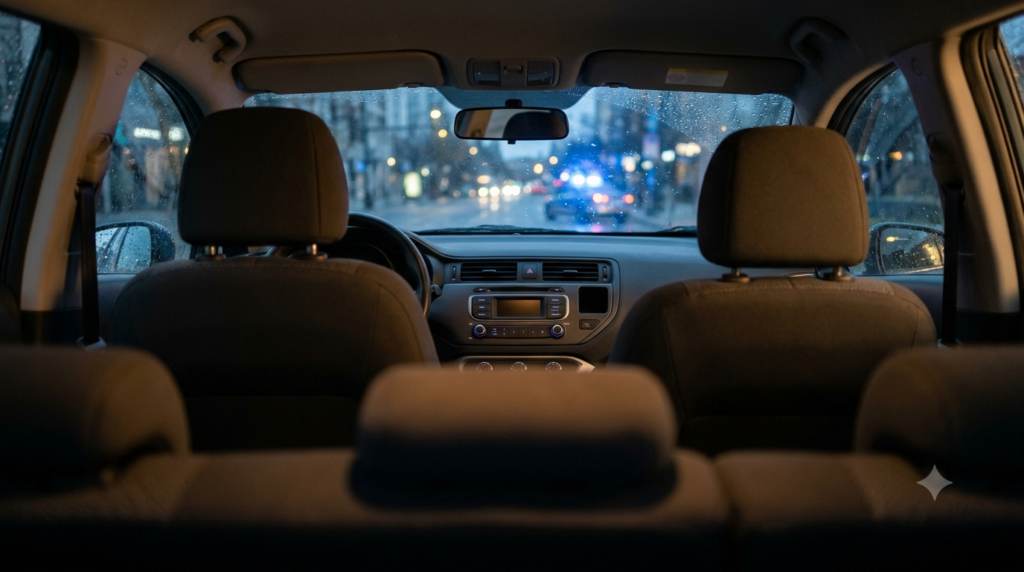
Yes. An off-screen siren is diegetic when the story suggests a police car or ambulance nearby, even if viewers never see it. Diegetic sound is not limited to visible objects. Hearing a source beyond the frame can establish a wider street, an approaching danger or an event happening elsewhere.
Picture a detective waiting inside an empty apartment. A distant siren grows louder, then fades as it passes the building. The changing sound hints at movement through the fictional city. Yet the camera never needs to show the vehicle for the sound to count.
Film analysis calls this off-screen diegetic sound, an important part of diegetic sound in cinema. It differs from non-diegetic music because the siren has a plausible source within the scene. The distinction also applies to unseen barking dogs, birds, thunder, crowds and voices beyond a doorway.
When Is Music Diegetic or Non-Diegetic?
Music is diegetic when its source exists in the narrative world, such as a radio, live band or character singing. Music is non-diegetic when the film supplies it primarily for viewers without presenting a source inside the story. The tune itself does not decide the category; diegetic sound in cinema depends on the scene.
Suppose two friends drive along a highway while a song plays through their dashboard speakers. The car radio makes it source music, so it is diegetic. Later, the same melody may continue across a landscape montage after the film leaves the car. If no in-world source remains, that passage may work as non-diegetic score.
Not every cut marks a clean switch. Directors sometimes blur the boundary to join scenes or shift our attention. Listen for changes in volume, echo and sound perspective. For example, radio music may sound thin inside the car, then expand into a full, polished soundtrack.
Why Foley and ADR Can Still Be Diegetic Sound in Cinema
Foley and automated dialogue replacement (ADR) describe ways of creating audio, while diegetic describes where that audio belongs in the story. A Foley artist may recreate footsteps in a studio. An actor may also re-record a line after filming. Both recordings can represent events inside the fictional world.
Consider a character climbing a wooden staircase. The original location recording might contain unwanted traffic noise. After the shoot, a Foley artist performs matching steps on another surface. We still understand the finished sounds as the character’s footsteps, not as a studio performance happening inside the plot.
For a closer look at how artists perform action noises, see MovieShala’s Foley sound in movies guide. It explains footsteps, clothing rustles and object handling without treating them as another name for every sound effect.
Does Re-Recorded Dialogue Stay Diegetic?
Usually, yes. When ADR replaces words that a character speaks in the scene, the finished dialogue remains diegetic. The performer may record in a booth months later, but the film presents the voice as speech occurring within the story. Recording location and fictional source are separate questions.
The sound editor then matches timing, tone and room ambience so the line feels attached to the character. If that work succeeds, viewers hear one continuous performance. The studio’s existence should not become part of their interpretation of the scene.
Not all recorded voices work this way. An external narrator who addresses the audience may be non-diegetic, while a character speaking from another room remains diegetic. Our ADR and dubbing explainer covers how dialogue replacement differs from narration, translation and Foley.
Recording Technique Is Not a Sound Category
A soundtrack contains layers built at different times. Crews record dialogue on set, editors source effects from libraries, performers create Foley and composers produce music. Nevertheless, none of those production methods alone tells you whether an element is diegetic. Its role within the fictional scene does.
This also corrects a common myth about diegetic sound in cinema: post-production recording does not make audio non-diegetic. A newly recorded kettle whistle can still represent the kettle on screen. Likewise, filmmakers might capture music during a shoot and later use it as an external score. The timeline of recording is not the classification rule.
Oklahoma State University’s film sound teaching material frames the issue around the diegesis: whether an element originates from, or can be located within, the narrative world. That is a more reliable test than checking when editors created it.
How Diegetic Sound in Cinema Builds Space and Suspense
Diegetic sound in cinema can reveal things the camera withholds. A knock behind a closed door gives the viewer a second space to imagine. An approaching train can suggest distance and movement before it appears. Meanwhile, ambient noise tells us whether a location feels crowded, isolated or unsafe.
For suspense, a source may arrive before its image. The audience hears slow footsteps outside a bedroom but sees only a still handle. That sound creates an expectation: someone occupies the unseen corridor. When the footsteps stop, the silence may feel more troubling than another loud effect.
Non-diegetic sound can support that moment without claiming a source in the hallway. A low score may tighten the mood, while the footsteps provide story information. This combination lets the filmmaker control both what the audience knows and how it feels.
What About Thoughts, Narration and Sounds Only One Character Hears?
Inner thoughts can complicate the simple rule that diegetic sounds are audible to every character. Film scholars sometimes call a sound internal diegetic when it belongs to one character’s mental experience. Other characters may not hear it, yet the film presents it as part of that character’s subjective world.
A whispered memory, imagined voice or ringing in someone’s ears may fit this description. The context matters because a narrator speaking to viewers could instead be non-diegetic. Even a voiceover can move between functions across a film, so avoid classifying all voiceovers alike.
Ask who the voice is meant for. If it represents a character remembering words, the sound may belong to their subjective story experience. If it gives viewers outside commentary without an in-world source, non-diegetic is usually the better label.
Can a Film Move Sound Between the Two Categories?
Yes. Films can shift a sound from diegetic to non-diegetic, or back again, when the storytelling changes its apparent source. A song might begin inside a café, expand over a montage and return to the café speaker. The transition can link physical action with the film’s emotional viewpoint.
Another familiar device starts with a powerful musical score. The next shot reveals a band actually performing the tune in the scene. That reveal changes how we understand what we have been hearing. It does not mean one label was necessarily wrong before the source appeared.
Such transitions are powerful because sound can carry us across time and space more smoothly than a picture cut. Watch for the moment when a character begins responding to the music. Their reaction may reveal that the source has entered the world of the story.
How to Identify Diegetic Sound in a Movie Scene
You can identify diegetic sound by tracing each audio element to its supposed source in the fiction. Watch a short scene twice, paying attention to character speech, objects, environment, score and narration. Then decide whether each sound belongs to what the characters experience or comes from the film’s storytelling layer.
- Listen without watching. Note distinct voices, objects, ambience and music before the picture influences you.
- Watch the action. Look for sources such as speakers, vehicles, footsteps and doors. Remember that sources can remain off-screen.
- Ask the story-world question. Could this sound plausibly belong to the characters’ environment or subjective experience?
- Check for changes. Notice whether music grows beyond a radio, narration gains a visible speaker or an unseen source appears.
- Describe the effect. Explain how the sound establishes place, gives information, hides a source or guides the audience’s emotion.
Use your own scene description as evidence, not a guess about studio equipment. Unless a production has revealed its methods, you cannot know whether a particular footstep came from set recording or Foley. Fortunately, you do not need that information to analyse its story-world role.
Sound Jobs Behind the Finished Movie
Different departments make the soundtrack, but their job titles do not map neatly onto diegetic and non-diegetic categories. A production sound mixer captures speech and location audio. Dialogue and ADR editors refine voices, while Foley artists and effects editors build physical detail. A composer creates score, and a re-recording mixer balances the layers.
These specialists work together because a scene rarely contains only one type of sound. A ringing phone, a quiet line and a rising score must all remain clear without competing for space. The mix shapes the audience’s attention while preserving the logic of the scene.
MovieShala’s film crew roles guide explains how the on-set sound team and post-production specialists fit into a larger film unit, including common Telugu industry terms.
Common Mistakes When Describing Film Sound
- “Off-screen means non-diegetic.” No. A voice behind a wall or siren outside still belongs to the fictional location.
- “Recorded in post means non-diegetic.” No. Foley and ADR can recreate diegetic actions and dialogue.
- “Every song is background score.” No. Music played by a character, radio or band has an in-world source.
- “All voiceovers are non-diegetic.” Not always. A character’s memory or internal voice may function differently from external narration.
- “Diegetic sound has to be natural.” No. A highly designed science-fiction machine can still exist inside the fictional world.
Keep diegetic sound in cinema tied to the story’s logic, not to how realistic the sound seems. A fictional spaceship can have diegetic alarms even though the crew created every beep. Similarly, a realistic orchestra recording may function as non-diegetic score when the scene has no orchestra.
The Bottom Line
Diegetic sound belongs to the story world; non-diegetic sound sits outside it for the audience. Dialogue, radio music and unseen sirens give characters a place to inhabit, while scores can shape our feelings about that place. Foley and ADR do not change categories merely because someone records them later.
When watching your next film, follow the source rather than the soundtrack credit. That single habit makes complex sound design easier to understand.
Frequently Asked Questions
What is an example of diegetic sound in a film?
A character answering a ringing phone is a simple example of diegetic sound. Both the voice and ring belong to the fictional scene. The phone can remain outside the camera frame and still count.
What is a non-diegetic sound example?
A suspense score that only viewers hear is a common non-diegetic example. It sets the mood without coming from an instrument or speaker inside the story. External narration often works the same way.
Is dialogue always diegetic?
Dialogue spoken between characters within a scene is normally diegetic. However, an external voice addressing viewers may be non-diegetic narration. The speaker’s relationship to the fictional world decides the label.
Is a radio song diegetic sound?
Yes, when the story presents the song as coming from a radio the characters could hear. It remains diegetic even if the camera never shows the radio. If the song later becomes an external montage score, its role can change.
Are off-screen sounds diegetic?
Yes, provided their sources belong to the story world. An unseen ambulance, dog or person in the next room can create off-screen diegetic sound. Off-screen does not mean outside the fictional world.
Is Foley diegetic or non-diegetic?
Foley is a production technique, not a fixed story-world category. Foley footsteps and prop noises are usually diegetic because they represent characters’ actions. A specially performed effect used only for audience emphasis could serve a non-diegetic purpose.
Is ADR a diegetic sound?
ADR dialogue is usually diegetic when it replaces words spoken by a character in the scene. The actor may record it in a studio, but the film presents it as story-world speech. Other voice recordings need separate judgement.
Can background music be diegetic?
Yes, if its source is a speaker, musician or other part of the scene. But the term background score usually refers to non-diegetic music. Look for the source instead of relying on the word background.
Can a sound change from diegetic to non-diegetic?
Yes. A song can start on a radio and then continue as an external score across a montage. Films may use that shift to connect scenes or change the audience’s point of view.