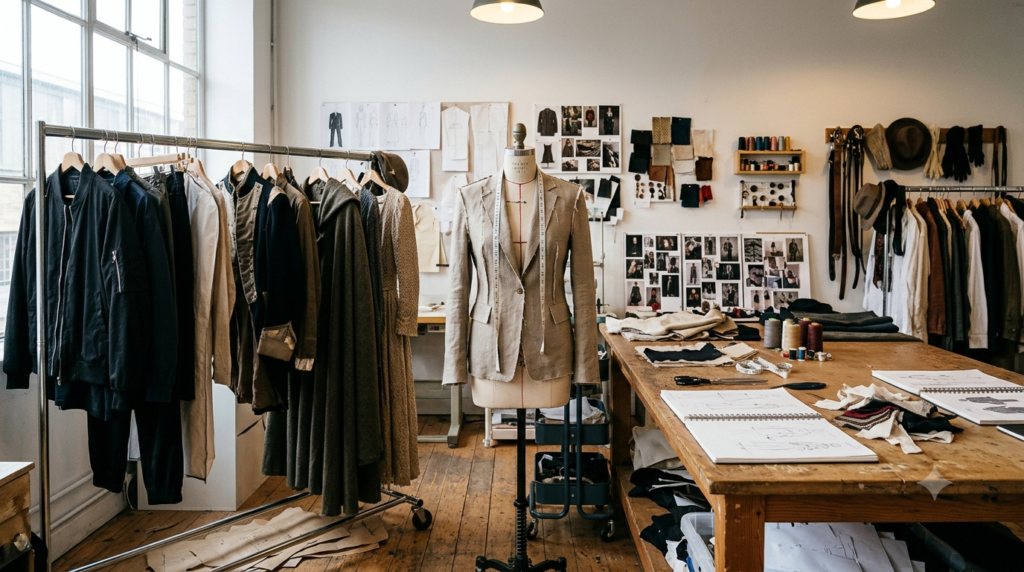
Film Costume Design: Character, Period and Continuity
Film costume design gives an audience clues about a character before the character speaks. A faded shirt can suggest years of use, while an immaculate uniform might reveal pride, pressure or a need for control. The strongest costumes serve the script rather than distract from it.
Clothing must also fit the story’s time and place. Then the costume team has to keep every detail consistent when scenes are filmed out of order. Here is how character, period research and continuity work together, with fictional scenes used throughout.
Film Costume Design at a Glance
- Character: Clothes suggest habits, work, money, confidence and personal history without replacing performance.
- Period: Designers research what people could have worn in that place and time, then choose what suits the story.
- Visual language: Shape, colour, fabric and wear help viewers distinguish characters and notice change.
- Collaboration: The director, production designer, cinematographer, actors and makeup team shape a coherent look.
- Continuity: Wardrobe records track garments, accessories, stains and styling across takes and shooting days.
The Academy of Motion Picture Arts and Sciences’ costume design teaching guide places character at the centre of this work. It also explains why everyday purchased clothes still count as designed costumes.
What Is Film Costume Design?
Film costume design is the planning, selection and preparation of clothing that actors wear as characters on screen. A designer uses the screenplay, character research and the director’s vision to choose garments and accessories. The team then obtains, fits, adjusts and maintains those pieces for filming.
The aim is not simply to make everyone look fashionable. A believable bus conductor, student or shop owner may need worn, ordinary clothes. Even an extravagant costume should tell us something specific about the person wearing it.
The Academy’s discussion of great costume design makes this character-first distinction clear. Costume decisions work best when they express someone’s inner life rather than advertise a designer’s taste.
How Clothing Reveals a Character
Start with the person, not the garment. Where does the character live, what can they afford, and which clothes do they keep wearing? Those questions create stronger choices than picking a fashionable colour and inventing a personality afterwards.
A costume might carry a careful repair, an old watch or shoes polished well past their best years. Such details can imply habit or personal value. Yet no colour or accessory has one fixed meaning, so context and performance still matter.
Look for choices, condition and repetition
Three useful clues are what someone chooses, how they care for it, and when they wear it again. Repetition can make a character feel real because most people do not own a fresh outfit for every day. The Academy’s guide also notes that wear belongs in plausible places, such as cuffs and knees.
For example, a fictional night-shift nurse might keep a neatly folded cardigan in her bag. She puts it on only after her shift ends. That small change could show her return to private life without a line of explanation.
A Fictional Character Arc Told Through Three Outfits
Consider an entirely invented short film about Leela, a young mechanic who wants to reopen her family’s workshop. Her dialogue stays restrained, so wardrobe gives viewers another way to notice her choices. None of the characters or production details in this example refers to a real film.
| Story moment | Costume choice | Possible meaning |
|---|---|---|
| Opening | Borrowed oversized work jacket | She is capable but does not yet feel the workshop belongs to her. |
| Setback | Same jacket, oil-marked sleeve and loose cuff | The work has taken a physical toll; she keeps going. |
| Decision | Jacket repaired and fitted, old name badge retained | She claims responsibility without rejecting her past. |
The jacket’s change carries more weight because the audience has already seen it. Buying Leela a completely new glamorous wardrobe could weaken that link. Costume design often works through a small, meaningful alteration rather than a dramatic makeover.
Film Costume Design for Period Stories
Period costumes help viewers place a character in a particular time, community and social setting. Research should look beyond famous outfits to ordinary workwear, regional differences and access to materials. Otherwise, a scene may resemble a costume party instead of a lived-in world.
The Academy guide recommends visual research through archives, photographs, museums and everyday records. Designers can also examine how garments fit and how people actually wore them. A photograph of one wealthy family should not stand in for everyone’s clothing in that decade.
In a fictional drama set in an earlier coastal town, compare a fisher’s weathered clothing with a trader’s carefully maintained garments. The differences should follow the characters’ work and circumstances. They should not rely on a single stereotyped outfit for an entire region.
Historical accuracy versus dramatic interpretation
A costume can respect a period without copying one museum garment exactly. Film requires readable shapes, movement and a consistent visual idea. The Academy notes that designers sometimes adjust colour or silhouette for dramatic effect, while keeping the world credible.
That freedom needs a clear boundary. If a story claims documentary precision, research should lead. If it openly creates a stylised past, the team can take deliberate liberties. In either case, avoid describing an invented costume choice as proven historical fact.
Colour, Texture and Silhouette on Camera
Film costume design uses more than clothing labels. A wide silhouette can change how a person occupies the frame. A rough fabric may absorb light differently from a smooth one, while a bright scarf may draw attention during a crowded scene.
Colour is useful for contrast and repetition, but it does not carry a universal emotional code. Red need not signal danger, and white does not always mean innocence. The meaning comes from the story, culture, light and surrounding set.
Costume designers select the actual clothing, fabrics and accessories that appear before the camera. Colour grading works at a different stage: it adjusts the recorded image’s colour, contrast and brightness during postproduction. A colourist can alter how a jacket looks on screen, but cannot change its physical cut or texture. MovieShala’s film colour grading guide explains the postproduction work in more detail.
Imagine an invented family drama in a cramped kitchen. One sibling wears sharply pressed clothes, while the other chooses soft, worn layers. Their differences become easier to read when the production designer and cinematographer coordinate the room’s colours and lighting.
Costume Continuity: Why the Same Outfit Must Match
Film crews often shoot scenes in a different order from the finished story. A costume worn in an opening scene might therefore return to set weeks later. Continuity records help recreate the exact clothing state at that moment in the plot.
The Academy describes a continuity book with photographs and notes about what actors wore and how they wore it. ScreenSkills also identifies wardrobe continuity as an important on-set responsibility. A note might record a rolled sleeve, missing button or rain-soaked hem.
Costume continuity does not mean a character must look unchanged forever. It means each alteration follows the story. A torn shirt should remain torn in the next continuous moment, but may disappear after the character has time to change.
An invented continuity problem, solved before the close-up
Suppose Leela spills tea on her left cuff in a fictional afternoon scene. The wide shot records the stain, but the crew films her close-up on another day. Before that close-up, wardrobe checks the stain’s shape, sleeve position and jacket fastening.
They also check whether the script calls for Leela to clean or change the garment. If not, an unstained sleeve would cause a visible jump. A reference photo and scene-by-scene garment record make the correction much easier.
Wardrobe continuity and picture continuity are related, not identical. The editor controls how movement joins across cuts, while costume staff track clothing details. Movieshala’s continuity editing guide explains that separate editing craft.
How Costume Design Works With Other Departments
Clothes belong inside the world that production design creates. A convincing character can still look wrong when their coat clashes with the scene’s visual plan. Therefore, department heads compare research, palettes, fabric surfaces and practical demands before filming.
Movieshala’s film production design guide explains how locations, sets, props and materials establish that world. Costume teams focus on what characters wear, while art teams focus mainly on the spaces and objects around them. Those boundaries can overlap in small productions, so teams should assign decisions clearly.
Actors bring another test: can they sit, run, dance or handle a tool naturally in the chosen clothes? Makeup and hair must also match the same period and character arc. For the wider chain of responsibilities, see MovieShala’s film crew roles guide.
Film Costume Design From Script to Set
A practical costume workflow begins long before the first shot. The Academy’s guide and ScreenSkills’ costume designer checklist describe script breakdown, research, fittings and coordination as key tasks. The exact order and job titles depend on production scale.
- Read the screenplay. Mark each character, story day, setting, major costume change and action affecting clothing.
- Build character research. Gather photos, material samples and notes about age, occupation, income, place and personal history.
- Agree on the visual approach. Discuss silhouettes, colours and story changes with the director and relevant departments.
- Plan the wardrobe. Decide which garments to buy, hire, alter or make, then check budgets and lead times.
- Fit the performers. Test comfort, movement and how fabric appears under planned lighting and camera angles.
- Record approved looks. Photograph complete outfits, accessories, footwear and styling for each story scene.
- Prepare for filming. Label garments, organise changes and identify duplicates needed for action or damage.
- Track every take. Update continuity notes after spills, adjustments, repairs and deliberate story changes.
This sequence is a planning model, not a claim that every film follows identical paperwork. On a smaller shoot, fewer people may cover several jobs. However, the information still needs a clear owner.
Buy, Hire or Make: Choosing the Right Costume Route
The wardrobe does not need to come from a sewing room to count as costume design. The Academy explicitly includes borrowed, purchased, rented and newly made garments. The creative task is choosing and adapting them for a character and scene.
| Route | Useful when | Main trade-off |
|---|---|---|
| Buy | Contemporary basics or outfits needing repeated alterations | Stock, fit and exact matching may vary. |
| Hire | Specialist period or formal garments | Return dates, size changes and damage terms can limit use. |
| Make | Distinctive silhouettes, unusual action needs or controlled duplicates | Requires skilled labour, fitting time and materials. |
A film may mix all three routes in one scene. The best choice is the one that serves character, continuity and practical access. A low-cost shirt that fits the story may be better than an expensive custom outfit.
What Can Go Wrong on a Costume Shoot?
The first risk is a creative mismatch: a garment looks striking but contradicts the character’s means or work. Another is a practical mismatch: the actor cannot move safely or the material reacts badly under lights. Both problems should emerge during fittings and tests, not during the final take.
A continuity failure can happen even after a look receives approval. A rented item may become unavailable, a stain may change shape, or the only shirt may tear. Teams therefore plan backups where necessary, especially for stunts, repeated damage and demanding schedules.
If an exact replacement is impossible, first look for an approved matching piece or a way to repair the original. Next, examine whether the scene permits a motivated wardrobe change. Editing can sometimes avoid a mismatched detail, but it cannot guarantee a clean fix.
What Beginners Often Miss About Costume Design
A character’s clothes have a history. Freshly purchased garments rarely show that history on their own, so teams may wash, soften or distress them deliberately. The wear should follow the character’s activity and remain consistent across the story.
In film costume design, accessories need equal attention. A watch, belt, scarf or pair of shoes can alter a costume’s meaning and become a continuity problem. Record the full look rather than photographing only the jacket or dress.
Also test costumes where they will appear: under the actual light and through the intended camera setup when possible. A beautiful texture in the fitting room may vanish in a wide shot. Conversely, a reflective surface might pull attention from an actor’s face.
A Simple Exercise to Study Film Costume Design
Choose an original, fictional character and describe three story moments: ordinary life, a setback and a decision. Build an outfit for each moment using the clothes and accessories available. Record why one item stays, changes or disappears.
Next, photograph the same outfit from two angles. Move one cuff, remove a ring or alter a stain between shots. See which difference becomes distracting when the images appear together. This exercise teaches story choices and continuity without a large production budget.
Use the Academy’s teacher guide collection for further classroom activities. Its costume design material treats close observation and character questions as core skills.
The Bottom Line
Film costume design succeeds when clothing feels like part of a person’s life, not a separate display. Good research makes the period credible, and deliberate choices reveal character change. Careful continuity then protects those choices across the shoot.
Start with one story question: what should viewers understand about this person from what they wear? Every fabric, repair and accessory should help answer it.
Film Costume Design: Frequently Asked Questions
What does a film costume designer do?
A film costume designer develops and oversees the clothing used to portray characters. The work includes script research, choosing or creating outfits, coordinating fittings and approving looks. A department team then helps prepare, maintain and track those costumes during production.
Is costume design the same as fashion design?
No. Fashion design generally develops clothing for wearers or markets, while film costuming serves a particular character and story. A film may need clothes that look unfashionable, old or damaged because that is what makes the character believable.
Do contemporary films need costume designers?
Yes. Everyday clothes still involve character choices, fit, colour, condition and continuity. Even when a production buys garments from shops, someone must decide which pieces belong to each person and prepare them for scenes.
How do costume designers research period clothing?
They examine historical images, surviving garments, archives and other sources connected to the place and period. They also study work, social class and practical needs. The goal is a plausible screen world, not a single outfit copied from a photograph.
Who is responsible for costume continuity?
The costume department maintains wardrobe records and checks clothing on set, often through a supervisor or standby costumer. The script supervisor also watches continuity across departments. Exact responsibility depends on how a production divides its crew roles.
Why do films use duplicate costumes?
Matching costumes can help when a scene involves stunts, dirt, rain, damage or repeated takes. Copies also provide a backup if an original becomes unusable. However, duplicates must match their intended story stage, including wear and alterations.
Does costume colour always have a hidden meaning?
No colour carries one guaranteed meaning across films and cultures. Colour choices can support relationships, mood or a character’s change, but viewers read them through the wider scene. Lighting, location and performance can alter that reading.
Can a low-budget film have strong costume design?
Yes. A small wardrobe can be effective when each choice supports character and the team keeps careful records. Borrowed or purchased clothes can work well after suitable fitting and preparation. A clear plan matters more than expensive materials.