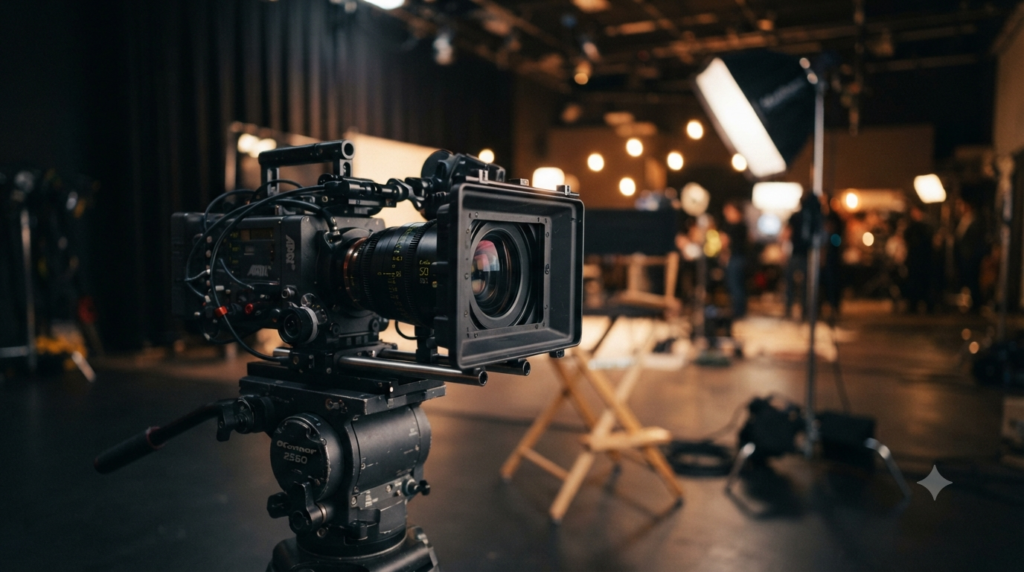
Film Depth of Field: Aperture, Focus and Background Blur
Film depth of field determines how much of a shot looks acceptably sharp in front of and behind the chosen focus distance. A blurred background can isolate a face, while a deeper focus range can keep several actors and their setting readable. The creative decision begins with a simple question: what should viewers notice in this moment?

Blur is not a shortcut to a cinematic image. It becomes useful when its place in the frame serves the story. Here is how aperture, distance, lenses and framing change the result, with fictional scenes you can test yourself.
What Is Film Depth of Field?
Film depth of field is the range of distances within a shot that viewers perceive as acceptably sharp. A lens focuses most precisely at a particular distance. Objects nearer or farther away grow progressively softer, yet some still look sharp enough on screen. That apparent range forms the depth of field.
The range has no hard, visible wall. A larger screen or closer viewing distance can reveal blur that went unnoticed on a phone. So the practical goal is not to make everything mathematically perfect. It is to control which details remain clear to the audience.
Shallow depth of field keeps a narrow distance range sharp. Deep depth of field allows a broader range to appear sharp. Neither style is automatically more professional. Both can guide attention when the shot has a clear purpose.
Film Depth of Field at a Glance
- Aperture: A lower f-number means a wider opening and usually a shallower focus range, if other conditions stay fixed.
- Focus distance: Focusing closer generally reduces depth of field. Focusing farther away usually increases it.
- Framing and focal length: Changing lenses affects magnification and background appearance, but moving the camera to match framing changes the comparison.
- Background spacing: Greater distance behind the subject can make the background look softer without changing the camera setting.
- Focus pulling: Moving the focus distance during a take is an action, not another name for depth of field.
These relationships match Canon’s explanation of depth of field and Sony Cine’s guide to camera focus. The examples below use made-up setups rather than measurements from a real production.
How Aperture Changes Film Depth of Field
Aperture is the adjustable opening inside a lens. Filmmakers describe its size using an f-number or, with many cinema lenses, a transmission-based T-stop. A smaller number means a wider opening. All else equal, that wider opening makes objects outside the focus distance blur more strongly.
Imagine a close shot of an actor at a cafe table. At f/2, lights behind the actor may appear as soft patches. Stop the lens down to f/8 without moving the camera or changing focus. The table and more of the room can now look clearer, although the actual result depends on the setup.
Aperture changes exposure as well as sharpness. Closing the iris admits less light, so the lighting team may need more illumination or a different exposure choice. A neutral-density filter can help maintain a wide aperture under bright light without forcing an unwanted shutter change.
That trade-off matters when film depth of field is part of a moving shot. Shutter settings also affect motion blur, which is different from out-of-focus blur. Therefore, changing the shutter simply to rescue exposure may alter how movement looks. Judge both effects before choosing the aperture.
Why Camera-to-Subject Distance Matters
A lens focused on someone nearby has less room for distance errors than the same lens focused far away. Move closer to a person and their eyes may stay sharp while their ears soften. Move back, keep the same aperture and refocus, and more of the subject can appear sharp.
Consider a fictional close-up of a wristwatch beside a notebook. With the camera very near the watch, the notebook may slip outside the sharp range. If the camera pulls back, both objects may appear clearer. The change comes from focus distance, not from a special film filter.
This also affects performers. An actor leaning towards the camera can leave the acceptable focus range, even while standing on the same floor mark. When that happens, the camera assistant can adjust focus or the crew can select a more forgiving aperture. The best solution depends on the performance.
For related planning, the Movieshala guide to film blocking explains how actor movement and camera positions work together. The space a performer occupies is part of the focus plan, not an afterthought.
How Focal Length and Framing Affect Background Blur
Longer lenses often appear to blur backgrounds more, especially when the camera stays in one place. They magnify the subject and the out-of-focus background, while showing a narrower slice of the setting. However, that comparison changes when you move the camera to restore the same shot size.
Imagine filming a medium close-up with a 35 mm lens, then switching to an 85 mm lens. From the original camera position, the actor becomes much larger in frame. To match the first composition, you must move farther away. Therefore, lens choice and camera distance cannot be separated in a fair comparison.
Same Camera Position Versus Same Framing
At one fixed camera position, a longer focal length generally gives a shallower depth of field for the same f-number and focus distance. With matching subject size, however, the depth of field around the subject can become broadly similar on the same sensor format. The background may still look quite different.
Moving the camera also changes perspective: how near and far objects appear in relation to each other. A long-lens portrait from farther away can make a distant wall seem larger behind the actor. This is why framing, perspective and background blur should be judged as a group.
Why Background Distance Can Matter More Than Gear
Even a wide aperture may not soften a wall panel directly behind an actor. Keep the actor, camera, lens, aperture and focus distance fixed, then move the wall panel farther back. The wall can appear softer because it now lies farther from the focus plane.
Consider two imagined interviews. In the first, the speaker stands just in front of a bookshelf. In the second, the bookshelf sits several metres behind them. The second setup may create a much softer backdrop at the same aperture, because the books lie farther from the focus distance.
Background design still matters when it falls out of focus. Bright points can turn into noticeable blur shapes known as bokeh. A distracting lamp can remain distracting even as a large soft circle. So move objects or alter the angle before buying a faster lens.
The blur itself has a visual character beyond its amount. Soft-edged highlights may feel calm, while strong outlines can draw the eye. When testing a lens, check the shape of these highlights as carefully as their size.
Does Sensor Size Control Film Depth of Field?
Sensor size does not directly change the optical depth of field of an otherwise identical lens setup. Yet a larger sensor usually calls for a different focal length or camera position when filmmakers want matching framing. Those changes can alter the depth of field that viewers see.
Therefore, a larger sensor is not a magic blur switch. Compare two formats only after stating what stays fixed: lens, aperture, focus distance, field of view or subject size. Without that condition, claims that one format always looks more cinematic become misleading.
Film Depth of Field Versus Focus Pulling
Film depth of field describes how wide the acceptably sharp distance range appears at a given moment. Focus pulling changes the selected focus distance during a shot. A focus puller may keep a walking actor sharp or deliberately shift attention from a foreground object to someone behind it. The techniques work together, but they are not the same.
| Concept | What Changes? | Story Effect |
|---|---|---|
| Shallow depth of field | Narrow sharp distance range | Separates a face from its setting |
| Deep depth of field | Broad sharp distance range | Keeps people and place readable |
| Focus pull or rack focus | Focus distance shifts during the take | Moves attention between distances |
| Motion blur | Movement records as streaking or smearing | Changes the look of motion, not focus range |
A rack focus often shifts emphasis between two subjects at different distances. A camera assistant may operate a follow-focus device, while the cinematographer and director decide where attention should land. Sony Cine’s first-assistant-camera interview describes this focus responsibility on set.
Importantly, focus can change while aperture stays fixed. The width of the sharp region may also change as focus moves nearer or farther. So a rack focus is a timed action that uses depth of field; it does not replace it.
Hypothetical Scene: A Secret Across a Cafe Table
Picture two fictional characters, Maya and Dev, sharing a table. Maya has just noticed an unopened letter beside Dev’s coffee. The director wants viewers to see her reaction before they notice the letter. Film depth of field gives the scene two clear ways to handle attention.
Version A: shallow focus. Frame Maya in close-up, with the letter behind her at another distance. Choose an aperture and camera position that keep her eyes clear while the letter remains soft. Viewers read her hesitation first, so the object can remain a question.
Version B: deeper focus. Move to a wider two-shot and use a smaller aperture, supported by lighting where needed. The letter, Maya and Dev can now share more visual weight. Instead of hiding information, the composition invites viewers to inspect the tension between them.
Neither version proves one character’s feelings. Performance, editing and sound still shape the moment. The shot simply decides how much visual evidence the audience receives at once. A storyboard and shot plan can help record those choices before rehearsal.
Hypothetical Scene: A Reveal on a Rainy Platform
Now imagine an entirely invented train-platform scene. A folded ticket rests near the camera, while a waiting traveller stands farther away. The director wants the audience to discover the traveller after noticing the ticket. This moment suits a deliberate focus shift.
Begin with the ticket sharp and the traveller soft. During the take, change focus towards the traveller as they react to an approaching train. That transition is a focus pull. The aperture and distance between subjects determine how separated the two focus positions look.
If the focus range is extremely shallow, small errors can spoil the reveal. The focus puller may therefore rehearse the move, mark distances or use a slightly smaller aperture. Meanwhile, the director can hold the first image longer so viewers have time to read the ticket.
A focus shift need not create a giant blur effect. Sometimes the most effective reveal is subtle. It guides the eye without announcing the camera trick.
How to Plan Film Depth of Field Before a Take
Start with the dramatic purpose, not the lowest f-number available. A short test can reveal more than a specification sheet because movement, background distance and display size all affect the final look.
- Name the priority. Decide whether viewers must read one face, two actors or the whole setting.
- Set the framing. Choose a shot size that serves the action, then find a camera position with useful perspective.
- Arrange the distances. Separate the main subject from the background where the scene allows it.
- Choose a working aperture. Test a wider and a smaller opening while keeping other settings consistent.
- Rehearse movement. Watch for actors leaning out of focus, then plan any needed focus pull.
- Review the take. Check the intended viewing size, exposure and focus before committing to the setup.
If the background stays too sharp, move it farther behind the subject or revise the framing before buying gear. If an actor repeatedly slips out of focus, stop down or improve focus tracking. No setting guarantees perfect focus through every performance, so test the actual blocking.
Common Mistakes That Weaken a Focus Choice
- Confusing blur with quality. Soft backgrounds cannot fix weak framing, poor light or unclear action.
- Ignoring the second actor. Very shallow focus can leave one face soft during a two-person exchange.
- Comparing lenses unfairly. A fixed camera position and matched subject framing are two different tests.
- Calling every focus shift depth of field. A rack focus changes the point of attention during a shot.
- Forgetting the background. A large bright blur shape may still compete with the subject.
- Blaming focus for motion blur. Camera shake or movement during exposure has another cause.
Film depth of field should support the scene’s geography as well as its emotion. A viewer who cannot tell where a character stands may miss a vital action. Before softening everything, ask which parts of the setting the audience must understand.
The Final Frame: Choose Clarity With Purpose
Film depth of field is a storytelling choice grounded in optics. Aperture, focus distance, subject spacing and framing all contribute to the result, while focus pulling shifts attention over time. Start by deciding what the audience needs to see. Then build the focus range around that goal, rather than chasing blur for its own sake.
Colour and contrast can also direct attention after the shot has been captured. For a separate part of the visual workflow, see Movieshala’s film colour grading guide. Grading can change the image’s mood, but it cannot reliably restore detail that the camera never recorded sharply.
Film Depth of Field: Frequently Asked Questions
What is shallow depth of field in film?
Shallow depth of field means only a narrow range of distances looks acceptably sharp. Filmmakers often use it to isolate a face or object against a soft background. However, the effect depends on focus distance, aperture and the subject’s surroundings, not just one camera setting.
What is the difference between depth of field and deep focus?
Depth of field describes the size of the sharp-looking distance range. Deep focus refers to a shot in which a broad range stays readable, often from foreground to background. Deep focus is one visual use of a large depth of field, not a separate focusing mechanism.
Does a low f-stop always mean a blurry background?
No. A low f-number makes the aperture wide and generally reduces depth of field when other conditions stay fixed. Yet a nearby background can still look fairly clear. Subject distance, lens choice and how much background appears in frame also matter.
Can a wide-angle lens create shallow focus?
Yes. A wide-angle lens can show shallow focus when the camera moves close enough or the aperture opens wide. However, wide lenses often show more apparent depth in ordinary wide shots. The scene’s distances and the final framing decide whether the blur stands out.
Is bokeh the same as depth of field?
No. Depth of field describes the range that looks acceptably sharp, while bokeh describes the appearance of out-of-focus highlights and areas. Two lenses can produce a similar focus range yet render background lights differently. Therefore, the amount and quality of blur are separate questions.
What is rack focus in cinematography?
A rack focus changes the lens’s focus distance during a single take, often shifting attention between subjects. It is also called a focus pull in many contexts. The shot can use shallow or deeper focus, although stronger separation usually makes the shift more obvious.
Is depth of field the same as motion blur?
No. Depth of field concerns sharpness across distances, whereas motion blur comes from movement recorded during exposure. A stationary, out-of-focus lamp can appear soft without moving at all. Likewise, a fast-moving hand can streak even when it passes through the camera’s sharp focus range.
How can beginners get more background blur without new equipment?
Move the subject farther from the background, then try a closer camera position that still suits the composition. Open the aperture if the lens and exposure allow it. After that, check the subject’s eyes carefully, because a narrower focus range leaves less room for movement.